Two commercial buildings can have completely different air quality problems, even when they use similar HVAC systems. One may have dust collecting inside its ductwork, while another may have dirty coils, clogged drain pans, or debris around its air handling units. Cleaning only the visible vents will not address these problems.
Commercial air duct cleaning generally involves inspecting and cleaning different parts of a building’s HVAC system to remove accumulated dust, dirt, and debris. The exact scope depends on the system’s condition, layout, and cleaning requirements.
What Does Commercial Air Duct Cleaning Cover?
Commercial HVAC systems contain several connected parts. Supply ducts distribute conditioned air, return ducts carry indoor air back to the equipment, and air handling units help circulate and condition that air. Dust and debris can collect in different areas as the system operates. Professional cleaning focuses on removing accumulated contaminants from the components included in the agreed scope of work.
-
Supply and Return Air Ducts
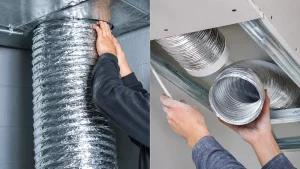
Supply and return ducts form the main air distribution network inside a commercial property. Supply ducts carry heated or cooled air from the HVAC equipment to different rooms. Return ducts transport indoor air back to the system for filtration and conditioning.
Over time, dust, construction debris, and other loose particles can settle along the interior surfaces. Accumulation may be more noticeable in buildings with heavy occupancy, frequent renovation work, or poor filtration maintenance. Technicians use mechanical agitation tools to loosen debris from duct surfaces. Vacuum collection equipment then captures the dislodged material and prevents it from spreading into occupied areas. Cleaning cover:
- Supply ductwork: Removes accumulated debris from the passages that deliver conditioned air.
- Return ductwork: Addresses loose contaminants inside the passages carrying air back to the HVAC equipment.
- Duct branches: Cleans accessible sections that connect the main ducts to individual rooms or zones.
- Return air plenums: Removes debris from accessible spaces where return air collects before reaching the equipment.
- Duct connections: Addresses buildup around accessible joints, transitions, and connections.
The cleaning plan should account for the building’s complete duct layout. Large properties often have several air distribution zones, so cleaning only the easiest sections may leave other areas untouched.
-
Air Handling Units (AHUs)
Air handling units play an important role in commercial HVAC operation. These units move air through the system and may contain fans, filters, heating and cooling coils, dampers, and other components. Dust can accumulate on interior surfaces and around moving parts. Cleaning these areas helps remove loose buildup that routine surface cleaning cannot reach. Depending on the equipment and agreed scope, technicians clean:
- Interior surfaces of the air handling unit
- Fan compartments and housings
- Blower assemblies and fan blades
- Mixing boxes and accessible dampers
- Condensate collectors and drain pans
- Other accessible internal components
Cleaning methods must suit each part’s material and function. Electrical connections, motors, controls, and sensitive equipment require appropriate protection during the process.
Good to Know:
Cleaning an air handling unit does not include repairing faulty motors, replacing damaged controls, or correcting mechanical problems. Those tasks require separate HVAC maintenance or repair services.
-
HVAC Coils and Condensate Drain Pans
Heating and cooling coils regulate indoor temperatures. Dust and debris can collect on their surfaces, restricting airflow and reducing heat transfer.
Coil Cleaning
Depending on the agreed scope, technicians will:
- Remove accumulated dust from coil surfaces.
- Clean evaporator fins using suitable methods.
- Check for visible buildup affecting airflow.
Condensate Drain Pan Cleaning
Cooling equipment removes moisture from the air, which collects in the condensate drain pan before draining away. Dirt and debris can block drainage and cause standing water.
| Component | Cleaning task |
| Drain pans | Remove accumulated dirt and debris |
| Drain lines | Clear accessible blockages where included |
Important:
Coil fins are delicate. Technicians should use suitable cleaning methods and avoid excessive pressure or chemicals that could damage the equipment.
-
Vents, Registers, Grilles, and Diffusers
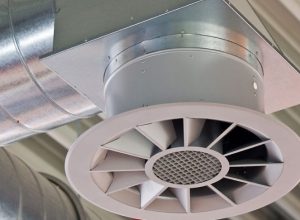
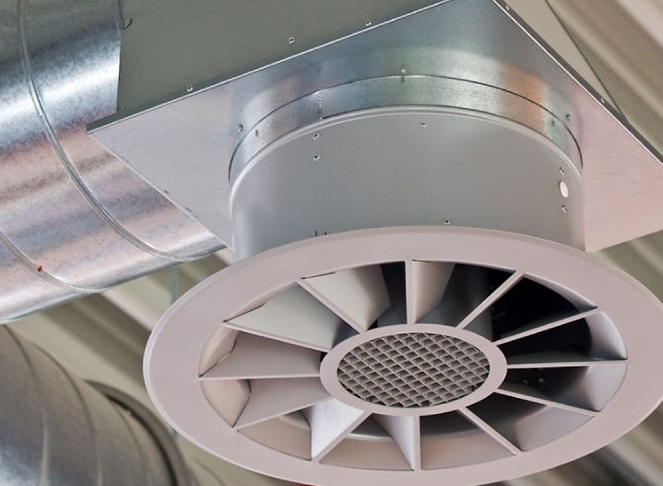
Air distribution devices are the visible parts of the HVAC system. Supply registers and diffusers release conditioned air into rooms, while return grilles allow indoor air to travel back into the system.
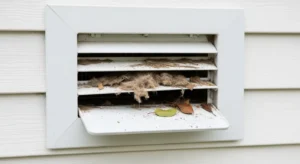
Dust often gathers around these openings, particularly in busy commercial environments. Cleaning typically involves removing accessible registers, grilles, and diffusers, cleaning their surfaces, and reinstalling them afterward. The technician may also clean the duct openings behind these devices where included in the service.
Different buildings use different air distribution devices. Offices may have ceiling diffusers, while warehouses may use larger grilles or industrial air outlets. Experienced contractors like Omega Duct Cleaning identify these components during the initial inspection.
Important:
Clean-looking vent covers do not prove that the connected ductwork is clean. Visible surfaces are only one small part of the air distribution system.
Which Other HVAC Components May Need Cleaning?
Not every commercial building uses the same equipment. Some properties have additional components that require attention based on their HVAC design and operating conditions.
1. Fans, Blowers, and Exhaust Components
Fans and blowers move air through different sections of the HVAC system. Their housings, blades, and surrounding compartments can collect dust and debris.
Cleaning may include fan housings, blower wheels, blades, shafts, and accessible internal surfaces. Removing accumulated material helps maintain cleaner equipment surfaces and allows technicians to inspect the components for visible concerns.
Some commercial systems also use dedicated exhaust fans to remove indoor air from restrooms, work areas, and other spaces. Accessible exhaust components may be included when specified in the cleaning agreement. However, kitchen exhaust systems need separate consideration. Grease-laden exhaust ducts require specialized cleaning procedures. Standard HVAC duct cleaning should not be presented as a replacement for commercial kitchen grease duct cleaning.
2. Filters and Filter Housings
Air filters capture airborne particles before air travels through the HVAC equipment. Commercial properties may use different filter types depending on their system design and filtration requirements.
Dust can collect around filter housings and accessible filter compartments. During an inspection, technicians can check for visible buildup, damaged filters, incorrect installation, or gaps around the filter frame. The actual filter service depends on the agreement:
- Reusable filters may be cleaned if the manufacturer permits it.
- Disposable filters generally require replacement rather than washing.
- Filter housings can be cleaned when included in the project.
- Upgrading filtration usually requires a separate assessment of system compatibility.
Good to Know:
Duct cleaning does not replace regular filter changes. Building managers should continue following the HVAC manufacturer’s maintenance schedule.
3. Dampers, Mixing Boxes, and Terminal Units
Large commercial HVAC systems often use dampers and terminal units to control airflow between different areas. Variable air volume (VAV) boxes, for example, regulate the amount of conditioned air delivered to individual zones. Dust may collect inside accessible sections of these components. Cleaning can address loose debris on surfaces and around moving parts when the equipment is included in the project.
Technicians should avoid disturbing calibration settings or damaging actuators and controls. Mechanical adjustment, balancing, and repair are separate tasks unless specifically included in the service agreement.
How Is a Commercial HVAC System Cleaned?
Commercial HVAC cleaning follows a planned process to remove debris without spreading it through the building. Technicians inspect the system, prepare the work area, and use suitable equipment for each component.
Step 1: Inspect the Building and HVAC Equipment
Technicians review the HVAC layout, locate air handling units, trace duct routes, and inspect accessible components. This helps identify:
- Areas with visible dust or debris
- Components that need cleaning
- Access and equipment requirements
- Any special arrangements for the building
Step 2: Prepare the Work Area
Technicians protect nearby surfaces, identify access points, and set up dust-containment measures. In occupied buildings, cleaning may take place after business hours or in separate sections to limit disruption.
Step 3: Set Up Vacuum Collection Equipment
Negative-pressure equipment helps capture loosened dust and debris instead of allowing it to spread into occupied areas. HEPA filtration may also be used when the equipment exhausts air inside the building.
Step 4: Remove Accumulated Debris
Technicians use mechanical brushes, air tools, and suitable agitation equipment to loosen debris from duct surfaces. A powerful vacuum system collects the material. Equipment and methods vary depending on duct material, size, and condition.
Step 5: Clean the Included HVAC Components
The team cleans the components listed in the work plan, which may include air handling units, blower assemblies, coils, drain pans, registers, and grilles. Each part requires an appropriate cleaning method to prevent damage.
Step 6: Inspect and Document the Results
Technicians check the cleaned areas, take photographs where appropriate, and prepare a service report. Any damaged insulation, moisture concerns, or mechanical issues should also be documented. The NADCA Commercial Cleaning Checklist outlines key steps for HVAC inspection, cleaning, containment, and verification.
Does Every Commercial Property Need the Same Cleaning Scope?
Not every office needs the same cleaning scope. A small office and a large industrial facility have different ventilation needs, equipment layouts, and operating conditions. Even two office buildings may require different cleaning plans depending on their age, occupancy, maintenance history, and HVAC design.
| Commercial property | Components that may need attention |
| Office buildings | Supply and return ducts, air handling units, vents, coils, and blower assemblies |
| Retail stores | Ductwork, diffusers, return grilles, filters, and HVAC equipment |
| Restaurants | HVAC ductwork, ventilation components, and separately assessed kitchen exhaust systems |
| Warehouses | Large duct runs, industrial ventilation equipment, fans, and air handling units |
| Schools | Supply and return ducts, air distribution devices, coils, and accessible HVAC components |
| Healthcare facilities | Specified HVAC components, ventilation equipment, and appropriate contamination controls |
Building use also affects how contractors plan the work. A busy retail property may require after-hours cleaning, while a warehouse may need lifts or specialized access equipment. Sensitive environments may require additional containment and coordination.
What Is Not Included in Standard Commercial Duct Cleaning?
Commercial HVAC cleaning has a defined purpose: removing accumulated contaminants from the components included in the project. Several related services may require separate work or specialist contractors.
| Service | Why it may require separate work |
| HVAC repairs | Faulty motors, controls, electrical components, and mechanical problems need repair work. |
| Duct sealing | Air leaks and disconnected joints require sealing or duct repair. |
| Filter replacement | New filters must match the equipment’s specifications. |
| Kitchen exhaust cleaning | Grease ducts require specialized cleaning procedures. |
| Mold remediation | Confirmed microbial growth may require separate assessment and remediation. |
| HVAC installation | Replacing equipment or installing new ductwork is outside routine cleaning. |
| Air balancing | Adjusting airflow between rooms requires testing and balancing procedures. |
Understanding these differences helps prevent confusion when reviewing estimates. Contractors should explain which tasks are included, which are excluded, and whether additional work is recommended.
When Should a Commercial Building Schedule Air Duct Cleaning?
Commercial properties do not all need cleaning at the same time. Inspection findings, building use, renovation activity, and system condition should guide the decision. Several situations may indicate that an HVAC system needs closer attention.
Visible Dust or Debris Inside Ducts
Visible accumulations inside accessible duct sections, air handling units, or other HVAC components may indicate a need for cleaning. Dust around a vent alone does not confirm that the entire duct system needs service.
Renovation or Construction Work
Construction and remodeling projects can introduce drywall dust, sawdust, insulation particles, and other debris into a building. These materials may enter HVAC components if the system is operating during the work. Inspecting the system after construction helps identify whether debris has reached the ductwork or equipment.
Persistent Odors
Unusual smells coming from the ventilation system may indicate accumulated debris, moisture problems, contaminated drain pans, or another issue. Cleaning may be appropriate when inspection identifies removable buildup, but the source of the odor should be addressed first.
Airflow or Equipment Concerns
Uneven airflow and reduced HVAC performance can have several causes, including dirty filters, blocked coils, duct leaks, or mechanical faults. Cleaning may help when accumulated debris is responsible, but it will not correct every airflow problem.
Pro Tip:
Ask the contractor to show you the affected components before approving cleaning. Photographs and inspection findings help distinguish genuine cleaning needs from unnecessary add-on services.
Final Thoughts
Commercial air duct cleaning involves much more than removing dust from visible vents. The service may cover supply and return ductwork, air handling units, coils, blower assemblies, drain pans, ventilation components, and other parts of the HVAC system. Inspection, proper debris collection, and final verification also play important roles in completing the job.
Omega Duct Cleaning provides commercial air duct cleaning services to help businesses address accumulated debris in their HVAC systems. Our team can assess your building’s requirements, explain the recommended cleaning scope, and provide an estimate based on the work involved. Contact Omega Duct Cleaning to discuss your commercial property’s needs and arrange an inspection.
Frequently Asked Questions
What is included in commercial air duct cleaning?
The service generally includes inspection and cleaning of specified supply and return ducts, registers, grilles, and other air distribution components. Depending on the project, it may also cover air handling units, blower assemblies, coils, drain pans, and ventilation components.
Does commercial duct cleaning include the entire HVAC system?
The scope depends on the contractor’s agreement with the building owner. A complete project should clearly identify which HVAC components are included. Ask for a written work plan instead of assuming every part of the system is covered.
How long does commercial air duct cleaning take?
Project duration depends on building size, ductwork layout, number of HVAC units, equipment access, and the amount of debris. Smaller properties may require less time, while large commercial facilities may need phased cleaning.
Does commercial air duct cleaning include filter replacement?
Not automatically. Technicians may inspect filters and clean reusable types when permitted by the manufacturer. Disposable filters generally need replacement, which may be priced separately.
Is kitchen exhaust cleaning included in commercial HVAC cleaning?
No. Kitchen exhaust systems collect grease and require specialized cleaning procedures. Standard HVAC duct cleaning does not replace professional grease duct cleaning.
How often should commercial air ducts be cleaned?
There is no single schedule that suits every commercial property. Building managers should arrange regular HVAC cleanliness inspections and schedule cleaning when inspection findings, system condition, or building activities indicate a need.
Does duct cleaning improve indoor air quality?
Removing accumulated contaminants from affected HVAC components may help reduce the amount of debris that can be redistributed through the system. However, indoor air quality also depends on filtration, ventilation, moisture control, housekeeping, and other building conditions.