A dryer that takes two cycles to dry a load does not always need a new vent. In many Bergen County homes, lint buildup is restricting airflow, and cleaning can solve the problem. In other homes, the vent itself is crushed, torn, disconnected, made from poor material, or routed in a way that keeps creating blockages.
The challenge is knowing which problem you have before spending money on the wrong service. Dryer vent cleaning in Bergen County makes sense when the vent system is still in usable condition but contains lint and debris. Replacement becomes the better choice when cleaning cannot correct a damaged or unsuitable exhaust path.
Should I Clean or Replace My Dryer Vent?
Start with the condition of the dryer exhaust duct, not its age alone.
- Clean the dryer vent when the duct is intact, connected, made from suitable material, and has a reasonable route to the outdoors, but lint buildup is limiting airflow.
- Repair or replace the dryer vent when the duct has physical damage, poor connections, crushed sections, holes, unsuitable vent material, or a routing problem that cleaning cannot correct.
A professional dryer vent inspection can often separate the two conditions before work begins.
This matters because cleaning a broken vent only removes lint from a system that still has the same defect. Replacing an intact vent because it is clogged can create an expense that a cleaning could have avoided.
Read More: How to Tell If Your Dryer Vent Needs Repair or Just a Cleaning
Dryer Vent Cleaning Is Usually Enough When Lint Is the Main Problem
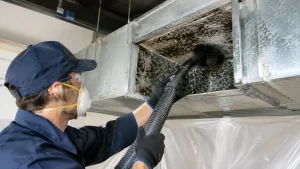
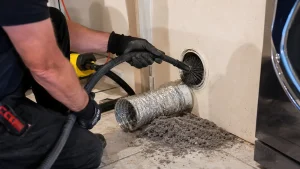
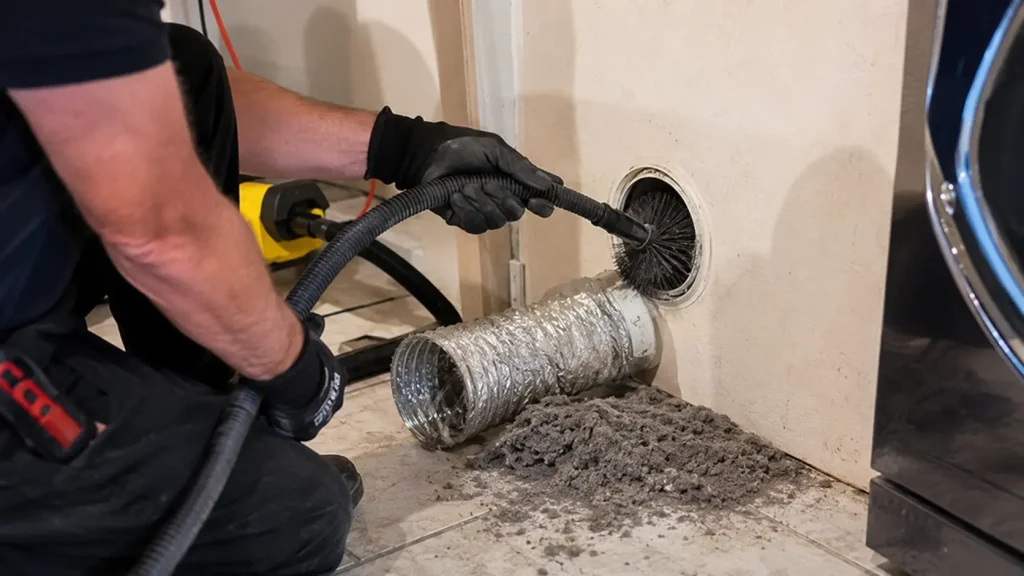
Lint slowly escapes the dryer’s lint screen and moves into the exhaust duct. Some of it leaves through the exterior vent, while some collects inside the duct, around bends, and near the termination point.
As the passage becomes narrower, the dryer has more difficulty exhausting hot, moist air.
A cleaning is often the right starting point when:
- The dryer vent duct is intact and securely connected.
- The dryer has started taking longer to dry similar loads.
- Airflow at the exterior termination feels weaker than before.
- The exterior flap opens poorly because lint has collected behind it.
- Lint is visible around the dryer connection or outside vent.
- The laundry room becomes warmer while the dryer operates.
- The vent has not been cleaned for a long period.
- The problem appeared gradually rather than after the dryer was moved.
The U.S. Fire Administration advises homeowners to clean dryer vent ductwork every year and reports that failure to clean was the leading factor contributing to the ignition of home clothes-dryer fires in its 2018 to 2020 data, accounting for 31 percent of those incidents. USFA dryer fire guidance also stresses regular lint removal.
Cleaning removes the restriction when lint is the cause. It does not repair damaged ductwork.
Dryer Vent Replacement Makes More Sense When the Duct Is Damaged
Cleaning cannot restore the shape of a crushed duct or close a hole in a vent line.
The National Fire Protection Association advises using rigid or flexible metal venting material to support proper airflow and drying time. Its dryer-safety guidance also tells homeowners to keep the exhaust pipe unrestricted and make sure the exterior flap opens while the dryer operates. NFPA clothes dryer safety guidance provides the same basic direction.
If the existing vent cannot meet those basic conditions, replacement may make more sense than repeated cleaning.
A Crushed Dryer Vent Should Be Replaced or Reconfigured
One common problem happens directly behind the dryer.
The appliance gets pushed toward the wall, and the transition duct becomes flattened between the dryer and the wall. Air now has to pass through a smaller opening.
Cleaning the lint from this section does not restore a badly crushed duct.
The damaged section needs to be replaced, and the dryer should be positioned so the new connection has enough space. Otherwise, the same problem can return as soon as the appliance is pushed back.
This is especially important in smaller Bergen County laundry rooms where the dryer has little clearance behind it.
Torn or Disconnected Dryer Ducts Need More Than Cleaning
A tear or loose joint can release hot air, moisture, and lint before the exhaust reaches the outdoors.
You may notice lint collecting behind the dryer or an unusual amount of heat in the laundry area. A hidden connection can also separate inside a wall, ceiling, basement, or utility space.
Removing lint does not correct the opening.
A minor connection problem may qualify for dryer vent repair. Larger damage or several failed sections can make replacement the more practical option.
Plastic or Poor Dryer Vent Material Can Be a Replacement Issue
The material used for a dryer exhaust path matters because the system carries hot air and lint.
NFPA recommends metal venting material. If an older installation uses plastic, vinyl, or another unsuitable duct material, simply cleaning the inside leaves the original material in place.
Flexible material can also create problems when it is installed with too much extra length. The duct can sag, fold, or form tight bends behind the dryer.
Those areas give lint more places to collect.
Not every flexible metal connection requires replacement. A short transition connection that remains open and is permitted by the dryer manufacturer’s instructions and applicable requirements can perform its intended job. The concern is a damaged, crushed, unsuitable, or poorly installed connection.
The permanent exhaust route through the home should be evaluated separately from the short transition between the dryer and the wall.
Repeated Clogs Can Mean the Dryer Vent Route Needs Attention
If you clean the vent and the same airflow problem returns soon afterward, the issue may not be the cleaning frequency.
The exhaust route itself may be contributing to the buildup.
Each bend changes how air and lint travel through the duct. A long run with several turns creates more resistance than a short route with fewer bends. Poorly supported ductwork can also sag, creating areas where lint collects.
A homeowner may keep paying for cleaning without addressing why the vent clogs so fast.
Replacement or rerouting deserves consideration when the existing system has:
- Too many tight bends.
- Sections that sag or collapse.
- A route that is much longer than necessary.
- Poorly connected duct sections.
- Repeated lint accumulation in the same area.
- An exhaust termination that restricts normal discharge.
Dryer manufacturer requirements and locally adopted building rules should be checked before changing the route. Maximum permitted duct length can depend on the dryer, fitting layout, and code requirements.
The goal is not to replace a vent just because it is long. The goal is to remove avoidable restrictions.
How Drying Time Helps Separate a Clog From a Damaged Dryer Vent
Longer drying time is one of the first clues that exhaust airflow needs attention, but it cannot tell you by itself whether cleaning or replacement is required.
A clogged vent and a crushed vent can create similar symptoms.
Hot, moist air cannot leave the drum at the expected rate. Clothes stay damp, so the dryer runs longer.
Start by checking the lint screen and exterior airflow. If the lint screen is clean but the outside vent has little airflow, the exhaust path needs inspection.
If cleaning restores strong airflow and normal drying, the duct probably did not require replacement.
If airflow remains weak after the vent is cleared, further inspection is needed. The problem may involve a crushed section, failed connection, exterior termination, dryer component, or another restriction.
This is why replacing a dryer because clothes take too long to dry can also be premature. The appliance may be working against a restricted exhaust system.
A Hot Dryer Does Not Automatically Mean the Vent Needs Replacement
Dryers create heat as part of normal operation, but unusual heat around the appliance or laundry area deserves attention.
Restricted exhaust airflow is one possible cause.
When lint narrows the vent, cleaning may restore the exhaust path. When the duct is crushed, kinked, or disconnected, the physical defect needs repair or replacement.
The important point is not to use temperature alone to choose the service.
A burning odor, smoke, scorching, or another immediate fire concern calls for stopping use of the dryer and having the appliance and exhaust system checked before another cycle.
Routine vent maintenance should happen before the problem reaches that point.
The Exterior Dryer Vent Can Need Replacement Even When the Duct Is Fine
Sometimes the duct from the dryer to the outside is in acceptable condition, but the exterior vent cover is not.
The flap or damper should open when the dryer operates and close when airflow stops.
Problems can develop when the cover is damaged, stuck, missing, or blocked by lint. Birds and other pests can also interfere with an exterior opening.
In that case, replacing the entire dryer exhaust duct may be unnecessary.
The better solution may be cleaning the duct and correcting the termination.
This distinction can reduce unnecessary work. A dryer vent is a system made of several parts, and one failed component does not always mean every section has to come out.
Bergen County Homes Can Have Different Dryer Vent Layouts
Laundry rooms across Bergen County are not all built the same way.
Some single-family homes have a dryer against an exterior wall with a short exhaust route. Others place laundry equipment in a basement, interior utility room, upper floor, condo, or townhouse.
Those locations can create longer runs through ceilings or walls before the exhaust reaches outside.
A short, accessible vent is easier to inspect. A concealed run may require more attention to determine where airflow is being lost.
This is one reason two homeowners can have the same drying complaint but need different solutions.
One property may need lint removed from an intact duct. Another may have an older vent route with damaged connections. A third may need dryer vent replacement because part of the system cannot provide an open exhaust path anymore.
Location does not determine the answer. The physical condition of the system does.
Should I Replace an Old Dryer Vent Just Because of Its Age?
Age can justify an inspection, but age alone is not enough to recommend replacement.
Metal ductwork that remains intact, connected, cleanable, and properly routed may continue to function. A newer duct can still need replacement if it has been crushed behind the dryer.
Condition matters more.
An older vent should receive closer attention when you do not know what material was used or whether concealed sections have been altered during previous renovations.
Homeowners who have recently purchased a property may not know the dryer vent’s maintenance history either.
An inspection can answer several practical questions:
Is the duct metal? Are the joints still connected? Has lint collected at bends? Is the exterior outlet opening during operation? Is the transition behind the dryer crushed? Does the exhaust route appear unnecessarily restrictive?
Those answers make the clean-versus-replace choice clearer.
Can I Clean the Dryer Vent and Replace Only the Damaged Section?
Yes, in some cases the best solution is a combination of cleaning and repair.
A complete vent replacement is not automatically required because one short section has failed.
For example, the permanent metal exhaust duct inside the house may be in usable condition while the flexible transition behind the dryer has been crushed. The transition can be corrected while the rest of the duct is cleaned.
The exterior cap may also need replacement while the main exhaust line remains in place.
A section-by-section approach can make more sense than treating the entire dryer vent as one disposable part.
It also helps address two different problems at once. The lint is removed, and the defect that was restricting airflow is corrected.
Cleaning a Bad Dryer Vent Can Leave the Main Problem Behind
The lowest initial cost is not always the lower long-term cost.
Suppose an exhaust duct contains lint but also has a crushed section. Cleaning removes the lint, but airflow remains restricted by the damaged duct.
The homeowner may notice some improvement and assume the issue has been corrected. Lint then begins collecting again around the restriction.
Another cleaning follows.
This cycle can continue until the physical problem is fixed.
The reverse can also happen. A homeowner replaces part of a vent because the dryer is slow, but the remaining duct is full of lint. The new section does not remove that blockage.
A proper assessment should therefore look for both contamination and physical defects.
Dryer Vent Cleaning Frequency Still Matters After Replacement
A new dryer vent is not maintenance-free.
Lint will continue passing through the exhaust system every time the dryer operates. The lint screen catches much of it, but not every fiber.
USFA advises cleaning dryer vent ductwork yearly, while NFPA recommends cleaning the vent pipe once a year or more often when clothes begin taking longer than normal to dry.
Usage can affect how fast lint accumulates.
A household running several loads each week may need closer attention than a home where the dryer is used less often. Long vent routes also deserve observation because there are more places for material to collect.
After replacement, keep cleaning the lint screen with each load and check that the exterior flap opens while the dryer runs.
Replacement corrects the duct condition. Maintenance helps keep the new system open.
Read More: How Often Should You Inspect Your Dryer Vent for Repairs?
Choose Dryer Vent Cleaning or Replacement Based on the Problem
The decision becomes easier when you separate buildup from damage.
Choose dryer vent cleaning in Bergen County when lint and debris are restricting an otherwise usable exhaust system.
Consider repairing when a connection, transition section, or exterior component can be corrected without removing the full run.
Consider replacement when the duct is crushed, torn, disconnected beyond a practical repair, made from unsuitable material, or routed in a way that continues to restrict airflow.
If you cannot tell which condition you have, avoid guessing from drying time alone. A vent inspection can show whether airflow is being limited by lint, physical damage, the installation, or a combination of problems.
Get the Dryer Vent Checked Before Paying for the Wrong Fix
Repeated drying cycles are frustrating, but replacing a vent that only needs cleaning wastes money. Cleaning a damaged vent can be just as frustrating because the airflow problem remains after the lint is gone.
Omega Duct Cleaning provides dryer vent cleaning in Bergen County along with dryer vent repair, replacement, installation, and related vent services from its Teaneck base, serving Bergen County communities including Hackensack, Paramus, Ridgewood, Fort Lee, Englewood, Mahwah, Fair Lawn, Tenafly, and others. If your dryer is running longer, the vent is damaged, or you do not know whether cleaning or replacement is the right next step, contact Omega Duct Cleaning to have the exhaust system checked before the problem continues.