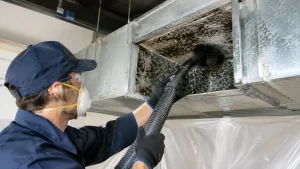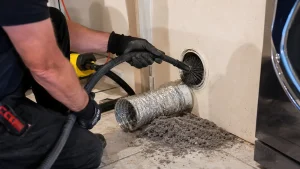
We’ve got to admit, homeowners don’t have it easy. It seems as though there’s always just something waiting to go wrong. Whether it’s your HVAC acting up or your dryer that’s decided it’s had enough, there’s one thing you know, and that is you’ve got to take action.
While your natural instinct would be to blame the appliance, we’d like you to take a walk down memory lane and remember when you last actually took care of your dryer. Dryers age and heating elements weaken, and maybe it’s time you finally started scouring for replacement pricing.
Here’s how to tell if you need dryer vent repair or a serious scrubbing session!
Why Does Your Dryer Vent Even Matter?
Before we dive deep into the how, let’s get the why out of the way.
The U.S. Fire Administration estimates that about 2,900 house fires occur each year due to dryers and washing machines. Whether that’s because the appliance is failing or the vent is acting up due to lint or damaged ductwork is a conversation for another day. The bottom line is that this is a serious matter requiring immediate attention from every homeowner.
The key point we’re hoping to highlight in this guide is that not every dryer vent problem is the same. While some problems arise from failing to clean the vent, others may be due to untimely repairs.
Tell-Tale Signs For Dryer Vent Cleaning
1. Drying Times Have Gradually Increased
The most reliable indicator of lint accumulating in your dryer vent is that your dryer now takes longer to dry washed clothes. Lint accumulates over time; it’s not something that happens overnight or in a week. It takes months to accumulate.
As lint coats the inside of the duct, the airway narrows, causing the blower motor to work harder to push air through the restriction. The drum temperature also rises because all that work converts into heat, leading to a thermal fuse.
2. Reduced Visible Exhaust
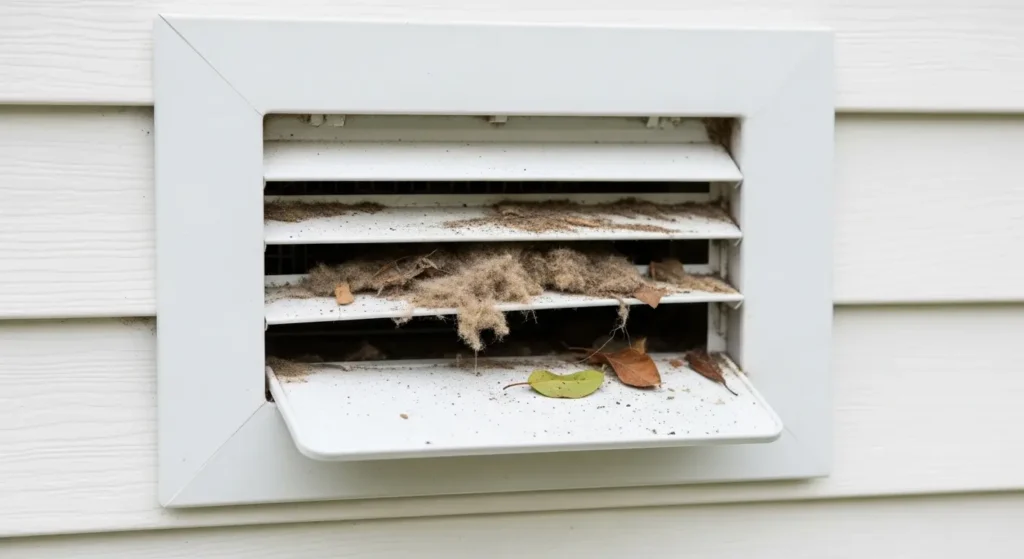
This is a simple test that requires you to walk outside while the dryer runs. Find the exterior vent termination and see if you can spot exhaust discharge. There should be visible steam if it’s cold outside, and warm air if it’s hotter. If you’re not seeing any discharge, this is likely because lint is restricting airflow.
3. The Laundry Room Feels Hot and Humid
When the exhaust can’t move freely through the ducts, it tends to back up into the room. This increases the humidity in the laundry room, which can lead to clamminess or visible condensation on cool surfaces. In severe cases, you might even notice musty or damp smells.
4. Less Lint on the Trap Screen
This might sound counterintuitive since you’d probably expect a dirty vent to produce more lint. But the lint trap screen is the part of the dryer that captures material that separates from the load in the drum. When airflow is restricted, less lint makes it all the way to the trap and settles in the duct instead.
5. You haven’t had a Cleaning Done for the Past Year
Most appliance manufacturers recommend annual dryer vent cleaning for regular use. If you’re running your dryer daily or frequently washing heavy items such as towels, bedding, and blankets, you definitely need to look into cleaning more often. In fact, most dryer-related fires are because of not cleaning regularly.
Tell-Tale Signs of Dryer Vent Repair
1. Sudden Degradation in Performance
This is probably the single most important differentiator. We’ve already established that lint doesn’t accumulate overnight. If your dryer was working well one week, and now suddenly seems to be underperforming, there’s definitely some structural issue involved.
2. Burning Smells During or After Cycles
If you notice a persistent, recurring burning smell, it means there’s lint accumulated somewhere it shouldn’t be. This usually happens when the duct separates, allowing exhaust and lint to bypass it and accumulate near structural components. The worst possible mistake you could make at this point is to continue using the dryer as if nothing had happened. This is most likely what leads to dryer fires!
3. The Dryer Duct Terminates in the Wrong Place
This is a surprisingly common problem that occurs in older homes. A dryer vent must terminate at the exterior of the building, not in a crawl space or behind a wall. This leads to lint accumulation, mold and even serious structural damage if the moisture persists.
If you’ve recently moved into a new place and you’re not sure where your dryer vent terminates, it’s worth checking out right now.
4. Worrisome Signs Return within a Few Months of Professional Cleaning
A properly cleaned duct shouldn’t need re-cleaning for at least 12 months under normal residential use. If you had the duct professionally cleaned and the same signs returned within a couple of months, the cleaning removed the symptom but left the cause. There’s definitely something structurally wrong with your dryer vent that needs to be checked by a professional.
Also Read: How Often Should You Inspect Your Dryer Vent for Repairs?
Useful Diagnostic Tools that Remove the Guesswork
The truth is, signs of a dryer vent needing a cleaning or a repair aren’t always black and white. That’s why it’s so important to deploy tools that help produce definitive answers and remove ambiguity.
1. Measuring Airflow
An anemometer is a hand-held tool that can measure exhaust velocity. The typical dryer duct system is designed to produce airflow within a range of 500 to 900 feet per minute for certain duct lengths. Measuring before and after cleaning tells you whether cleaning restored flow to the target or whether the problem persists. If it’s the latter, you seriously need dryer vent cleaning as soon as possible!
2. Duct Camera
A duct camera is a small, flexible camera that’s inserted into the duct to visually examine the interior conditions throughout the run cycle. This is particularly great for ducts running through walls, floors, or ceilings where the intermediate sections can’t be directly examined. A camera can identify separation points, crush points, incorrect duct material segments within an otherwise correctly configured run, animal nesting material, and the degree of lint accumulation at various points.
What Happens When You Clean a Duct That Actually Needs Repair
You’ll be surprised to find out just how common this problem really is. Cleaning out a duct that actually needs repairing isn’t just frustrating; it’s also pretty dangerous.
Dryer cleaning might temporarily solve the issue, but the underlying structural problem remains. Airflow might improve because the acute lint accumulation was removed, until your dryer starts acting up again a few months down the road. Some people may reschedule a cleaning, assuming the first job was choppy and not done well, but this is simply a vicious cycle that continues to repeat itself.
Beyond all that wasted time and money, cleaning a duct that has a separation issue, for example, only worsens the situation. The rotary brush may, in fact, push accumulated debris further down the gap into the wall cavity or ceiling space, which is extremely dangerous since the material is highly flammable. The space behind the wall may now have a lint deposit that wasn’t there before.
This is why the correct sequence is so important: inspection first, and then clean, or a repair first, and then the clean. A proper assessment before any work actually begins is extremely important. Skipping the assessment to get straight to the cleaning is the decision that creates the most pressing issues.
Your Home and Family’s Safety Are Far Too Important for Guesswork!
If you’re still relying on guesswork to help, you’re gambling on your family and home’s safety. The good news is that Omega Duct Cleaning handles everything for you. Whether it’s dryer vent cleaning or a dryer vent repair for the structural and installation issues that no amount of cleaning will resolve, we’ll help you figure it out!
Every job starts with a proper assessment before any work begins. Contact us to get a real assessment of what your vent system actually needs!