You walk into your office on a Monday morning. There’s a weird smell you can’t quite place. And by noon, half your team is complaining about headaches or stuffy noses.
Most business owners don’t give much thought to what’s happening inside their ductwork. It’s hidden away in the ceiling or behind walls. But those ducts are working every single day. They’re moving air through your entire building. And over time, they collect all kinds of stuff you really don’t want floating around.
So the big question is, how often should commercial air duct cleaning actually happen? And why does it matter so much? We’re going to break all of this down in a way that actually makes sense.
What’s Hiding in Your Commercial Ducts
Before we talk about timelines, it helps to understand what we’re dealing with here. Your duct system is basically a highway for air. And just like any highway, things start to pile up along the sides.
Commercial buildings deal with a lot more than residential homes. You’ve got more people coming in and out. More doors opening. More foot traffic bringing in dirt and debris. And depending on your industry, you might have grease, chemicals, or other particles floating around.
Over time, your ducts can collect:
- Dust and dirt from daily operations
- Pollen and allergens from outside
- Mold and mildew if there’s any moisture
- Bacteria and other microorganisms
- Debris from construction or renovation work
- Pest droppings if there’s any infestation
According to a 2022 report from the Environmental Protection Agency, indoor air quality problems account for roughly 50 percent of all illnesses in commercial buildings. That’s not a small number. And a lot of those problems trace back to dirty HVAC systems.
The General Timeline Most Experts Recommend
The National Air Duct Cleaners Association suggests that most commercial buildings should schedule duct cleaning every three to five years. But that’s just a baseline. It’s not a one-size-fits-all answer.
Some businesses need commercial air duct cleaning way more often. Others might be fine stretching it a bit longer. It really comes down to your specific situation.
A 2021 study published by ASHRAE found that buildings with regular duct maintenance had up to 20 percent lower energy costs compared to those that skipped cleanings. That’s real money saved every month. And it adds up fast over the course of a year.
Industries That Need More Frequent Cleaning
Not all businesses are created equal when it comes to air quality needs. Some industries just produce more airborne particles. Others have stricter health requirements. And some deal with both.
Here are businesses that typically need duct cleaning every one to two years:
- Restaurants and food service operations where grease builds up fast
- Healthcare facilities where air quality directly affects patient safety
- Manufacturing plants with dust, fumes, or chemical exposure
- Schools and daycares with high foot traffic and vulnerable populations
- Hotels and hospitality spaces with constant guest turnover
- Retail stores in malls or busy shopping areas
If your business falls into one of these categories, waiting five years between cleanings is probably not a good idea. The buildup happens faster. And the consequences of ignoring it can be more serious.
Factors That Affect Your Cleaning Schedule
Even within the same industry, two buildings might have very different needs. There are a bunch of factors that can push you toward more frequent cleanings.
Location matters a lot. A building near a construction site or in a dusty area will collect debris faster. Coastal areas deal with salt and humidity that can cause mold growth. Urban locations have more pollution coming in from outside.
Building age is another big one. Older HVAC systems weren’t built with modern efficiency standards. They tend to collect more dirt and have more places for buildup to hide. If your building is more than 20 years old, you probably want to check those ducts more often.
Occupancy levels play a role too. A building with 500 employees produces way more dust and particles than one with 50. The more people using a space, the faster things get dirty.
Recent renovations can also trigger the need for cleaning. Construction work sends tons of dust and debris into the air. And guess where a lot of that ends up? Right in your ductwork. A 2020 report from the Indoor Air Quality Association noted that post-construction duct contamination is one of the top reasons for poor air quality complaints in commercial spaces.
Warning Signs That Cleaning Is Overdue
Sometimes you don’t need to wait for a schedule. Your building will give you clues that something is off. You just have to know what to look for.
Pay attention to these red flags:
- Visible dust puffing out from vents when the system turns on
- Musty or stale odors that won’t go away no matter what you try
- Increased allergy symptoms or respiratory complaints from employees
- Uneven heating or cooling in different areas of the building
- Higher than normal energy bills without any obvious explanation
- Dust settling on surfaces faster than usual
- Noticeable mold growth anywhere near vents or air handlers
If you’re seeing two or more of these signs, it’s time to take action. Waiting only makes the problem worse. And worse problems mean higher costs down the road.
Also read: Why Some Industrial Facilities Need Duct Cleaning Every Quarter
The Cost of Ignoring Duct Maintenance
A lot of business owners skip commercial air duct cleaning because they see it as an unnecessary expense. But the truth is, ignoring it ends up costing way more in the long run.
First, there’s the energy side. The US Department of Energy estimates that 25 to 40 percent of energy used for heating and cooling is wasted due to contaminated HVAC systems. That means dirty ducts are literally making you pay more every single month for the same amount of air.
Then there’s the equipment wear. When ducts are clogged, your HVAC system has to work harder. That extra strain leads to more breakdowns. And eventually, it shortens the lifespan of the whole system. Replacing a commercial HVAC unit can cost anywhere from $15,000 to $75,000 depending on the size of your building. That’s a massive expense that proper maintenance could delay by years.
And we can’t ignore the human cost. Poor indoor air quality leads to what researchers call Sick Building Syndrome. Employees get headaches, fatigue, and respiratory issues. Productivity drops. Sick days go up. A Harvard study from 2021 found that workers in buildings with good air quality scored up to 61 percent higher on cognitive function tests compared to those in buildings with poor air quality.
Your employees are your biggest asset. If the air they’re breathing is making them sick or tired, that affects everything. Sales calls. Customer service. Product quality. All of it.
What a Professional Cleaning Actually Involves
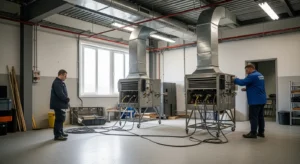
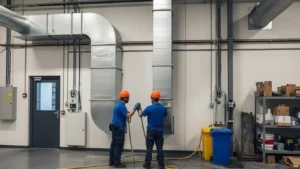
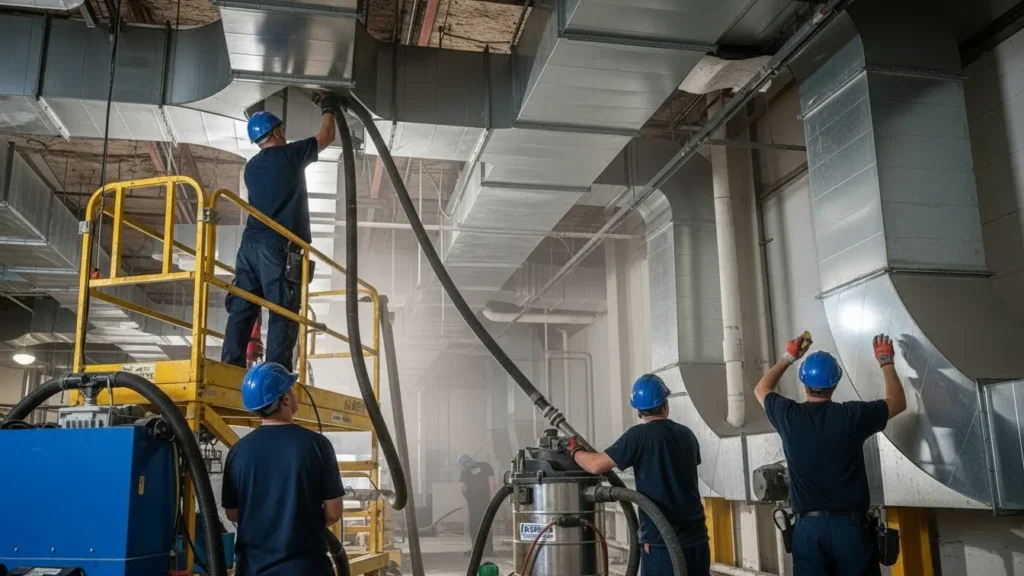
Professional commercial air duct cleaning in Teaneck, NJ isn’t just someone running a vacuum through a few vents. A proper job is thorough and systematic.
Here’s what a quality cleaning process typically includes:
- Full inspection of the duct system using cameras and other tools
- Cleaning of all supply and return air ducts throughout the building
- Removal of dust, debris, mold, and any biological growth
- Cleaning of registers, grilles, diffusers, and other components
- Inspection and cleaning of the air handler unit
- Checking for leaks, gaps, or damage in the ductwork
- Sanitization treatment if needed for mold or bacteria
- Final inspection to confirm everything is clean
The whole process can take anywhere from a few hours to a full day, depending on the size of your facility. Good companies work around your schedule so you don’t have to shut down operations. And they provide before and after documentation so you can actually see the difference.
How to Choose the Right Service Provider
Not all duct cleaning companies are the same. Some do a great job. Others cut corners and leave you with the same dirty ducts you started with.
Look for these things when choosing a provider:
- NADCA certification which shows they meet industry standards
- Years of experience specifically with commercial buildings
- Proper insurance and bonding to protect your business
- Clear pricing with no hidden fees or surprise charges
- Positive reviews from other commercial clients
- Willingness to provide references you can actually contact
- A detailed process explanation before any work starts
Cheap quotes often mean cheap work. And cheap work means you’ll be right back where you started in a year or two. It’s worth paying for a company that does the job right the first time.
Why Omega Duct Cleaning Is Different
At Omega Duct Cleaning, we’ve spent years working with commercial clients across all kinds of industries. We know that every building has its own challenges. And we approach every job with fresh eyes to figure out exactly what’s needed.
Our team is trained and certified. We use professional-grade equipment that actually gets the job done. And we don’t cut corners just to finish faster. When we say the ducts are clean, we mean it. We’ll show you the results so you can see for yourself.
We work with offices, restaurants, warehouses, medical facilities, and more. No building is too big or too small. And we always work around your schedule because we know your business can’t just stop.
The air in your building affects everyone who walks through the door. Your employees. Your customers. Your visitors. They all deserve to breathe clean air. And your HVAC system deserves to run without fighting through years of buildup.
Don’t wait until someone gets sick. Don’t wait until your energy bills spike out of control. And definitely don’t wait until your HVAC system breaks down in the middle of summer or winter.
Give Omega Duct Cleaning a call today. Let’s talk about what your building needs and get your air quality back to where it should be.