You booked the appointment, and now a different worry starts. Do you take a half day off work, or a full one? Can the kids nap through it? Will the crew still be in your basement when dinner needs to happen? Most homeowners get a vague answer from the phone call, and vague answers make planning hard.
For most single-family homes, residential air duct cleaning takes between two and five hours. That window covers inspection, setup, the cleaning itself, and the final walkthrough. Where your home lands inside that window depends on the number of vents, how many heating and cooling systems you run, and how long the ducts have gone without service. Our residential air duct cleaning service follows a fixed sequence, and once you see how each stage uses the clock, the estimate stops feeling like a guess.
This guide breaks the appointment down hour by hour, then shows you what pushes the number up or down in your own house.
The Short Answer, Sorted by the Size of Your Home
Here is the time range you can plan your day around. These figures assume one crew working a forced air system with source removal equipment.
- Under 1,500 square feet with one system: about 2 to 3 hours
- Between 1,500 and 3,000 square feet with one system: about 3 to 4 hours
- Over 3,000 square feet, or any home running two systems: about 4 to 6 hours
- Ducts never cleaned before, or heavy pet and renovation buildup: add 1 to 2 hours
- Each extra zone or additional furnace: add roughly 1.5 to 2 hours
A useful shortcut is vent count rather than square footage. Homes with 10 to 12 supply and return openings usually finish near the low end. Homes with 20 or more openings sit at the high end, because every register gets pulled, brushed, vacuumed, and put back.
Read More: Does Air Duct Cleaning Actually Make a Difference in Your Home?
Hour by Hour: Where the Time Actually Goes
The total time makes more sense once you see the stages. A full residential air duct cleaning appointment splits into five parts, and each one has a fairly predictable length.
Inspection and System Mapping: 20 to 30 Minutes
The crew walks the house and counts every supply and return opening, then locates the air handler, the main trunk line, and the return drop. Many technicians run a camera into the trunk to see what they are dealing with before touching anything. This step looks slow, and homeowners often wonder why nobody has started cleaning yet. The mapping decides where the vacuum gets connected, and a wrong connection point means suction reaches one branch instead of the whole system.
Homes with ductwork split between a basement and an attic take longer here, because the crew has to map two separate paths.
Setup and Containment: 15 to 30 Minutes
Next comes the part that protects your floors and furniture. The technician parks the truck-mounted vacuum or wheels in the portable unit, runs the collection hose to the trunk line, and cuts or opens an access port. Registers get blocked off one section at a time so suction stays concentrated. Drop cloths go down at the equipment and at the air handler.
Older homes with sealed or painted-over access panels add time here, since the crew has to open a port and then patch it properly at the end.
Source Removal Through the Duct Runs: 1.5 to 3 Hours
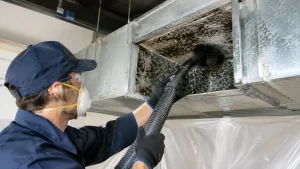
This is the longest stage and the one you are paying for. With negative pressure holding the system under vacuum, the technician feeds rotating brushes, air whips, or compressed air nozzles down each branch to break debris loose from the duct walls. The vacuum pulls that material out through the collection hose rather than into your rooms.
Every branch gets worked separately. A house with 18 openings means 18 individual runs, plus the returns, plus the main trunk. Flexible duct slows things down compared with rigid sheet metal, because the ribbed interior holds dust in the valleys and the material tears if a brush is pushed too hard. Anyone curious about the machines behind this stage can read our breakdown of the equipment professional air duct cleaners use, which explains why suction ratings matter so much to the timeline.
Air Handler, Blower, and Registers: 45 to 90 Minutes
Ducts are only part of the system. The blower wheel, the supply and return plenums, the filter housing, and the register faces all collect buildup, and skipping them leaves a clean duct feeding air across dirty components.
Blower wheels take the most patience. Dust packs into the curved fins and has to come off blade by blade, which alone can run 45 minutes to an hour on a neglected unit. Register grilles get washed rather than wiped when they carry grease film from kitchen airflow.
Sanitizing, Reassembly, and Walkthrough: 20 to 40 Minutes
If you requested an antimicrobial application, fogging the system adds 15 to 20 minutes. The crew then seals access ports, reinstalls registers, replaces the filter, restarts the system, and checks airflow at several openings. A final walkthrough with before and after photos closes the visit.
Add these together and a mid-size home lands at roughly three and a half hours. That figure matches what most residential air duct cleaning jobs look like in practice.
Why Two Similar Houses on the Same Street Take Different Times
Two homes with matching square footage can differ by two hours. These are the variables that move the number.
Number of systems and zones. A single furnace serving the whole house cleans fastest. Homes with separate upstairs and downstairs units carry two air handlers, two blower wheels, two filter housings, and two trunk lines. The second system rarely takes half the time of the first, since setup repeats in full.
Duct material and layout. Rigid sheet metal cleans quickly because brushes travel straight and the interior is smooth. Flexible duct with sharp bends and long sagging runs takes more passes. Duct board holds dust in its fibrous lining and calls for a gentler approach.
Access. Ductwork in an open basement is the easiest case. Runs buried in a low crawl space, behind finished ceilings, or above blown-in attic insulation force the crew to work in awkward positions with limited reach.
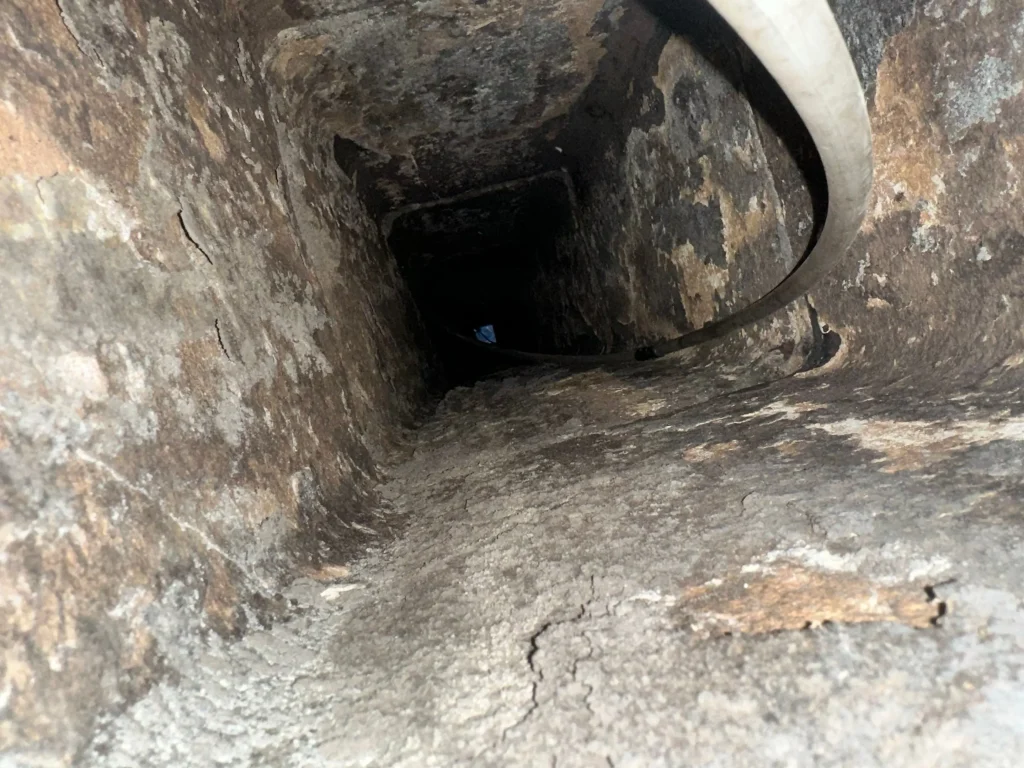
How long since the last service? A system cleaned four years ago holds a light dust layer that lifts fast. A system that has never been touched in 25 years can hold construction debris, insulation fragments, and compacted dust that needs several passes on the same branch.
Household conditions. Two shedding dogs, a recent kitchen renovation, indoor smoking, or a basement humidity problem all add material to the ducts. Rodent nesting or visible mold changes the job entirely, since those need containment and sometimes remediation before normal cleaning continues.
Filter history. Missing filters, wrong-size filters, or gaps around the filter rack let unfiltered air bypass straight into the system. Homes with that history almost always run past the estimate.
The Two Hour Bargain That Ends Up Costing You Twice
You will notice advertisements promising a whole house done in 60 to 90 minutes at a very low price. The math does not work, and understanding why saves you from paying twice.
A crew moving that fast is usually vacuuming at the register face and nothing more. The vacuum never connects to the trunk line, the blower wheel never gets touched, the coil never gets seen, and the return drop stays untouched. Air comes out of the vents smelling slightly different for a week, then the dust returns because the source was never removed.
The result is worse than doing nothing in some cases. Loosened debris that is stirred but not captured settles into your rooms, and a brush pushed carelessly through flexible duct can tear the inner liner. Torn liner leaks conditioned air into your attic and pulls insulation fibers into the airflow, which turns a cleaning appointment into a repair bill.
When a company quotes you a time, ask which components are included in that number. If the answer covers only registers and visible duct, the low price is doing the talking, not the work.
What the Appointment Feels Like While You Live Through It
Time on the clock is one thing. What that time feels like inside your home is another, and homeowners rarely get told.
The vacuum unit produces steady noise similar to a shop vacuum running continuously, and it stays on through most of the middle stage. If the truck-mounted unit is used, the noise sits outside, and a hose runs through a door or window, which means one entry point stays partly open. In winter, that matters, so most crews plan the shortest hose path available.
Technicians move room to room and need clearance at every vent, including the ones behind the sofa and under the bed. Doors between rooms stay open for hose movement. Pets are better placed in a closed room or with a neighbor, since equipment noise and open doors make escapes easy.
You do not need to hover, though someone should be home to grant access to the basement, attic hatch, or utility closet, and to be there for the closing walkthrough where the technician shows you what came out.
Small Steps That Shorten Your Appointment by 30 to 60 Minutes
Preparation moves the finish time earlier, and none of it takes long.
- Clear furniture, rugs, and storage boxes away from every supply and return vent the day before
- Unlock and clear the path to the attic hatch, crawl space entry, and utility closet
- Move vehicles so the service truck can park within hose reach of a door
- Secure pets in a room that has no vent work pending, or arrange care elsewhere
- Write down which rooms feel weakest on airflow or carry an odor, so the crew checks those first
- Have a new filter of the correct size ready, since a stop at the store mid-job adds 30 minutes
- Clear the area around the furnace or air handler by at least three feet
Homeowners who handle these steps regularly see their residential air duct cleaning finish closer to the low end of the estimate.
Extra Services That Change the Total Time
Many households add related work to the same visit, which makes sense because the crew is already set up. Each addition carries its own block of time.
Coil Cleaning
The evaporator coil catches whatever gets past the filter, and a coated coil restricts airflow while raising energy use. Adding coil cleaning to the appointment usually adds 45 minutes to an hour, longer when the coil sits in a tight cabinet that has to be partly opened.
Dryer Vent Cleaning
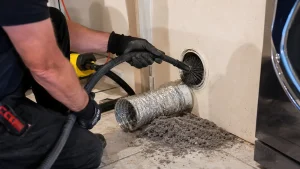
This runs on a separate duct from your HVAC system, so it does not overlap with ductwork at all. Adding dryer vent cleaning to the same visit typically adds 30 to 60 minutes, depending on the length of the run and whether the exterior termination is at ground level or up on a second story wall. Lint buildup is a fire concern, so many households schedule both together once a year.
Sanitizing and Deodorizing
An antimicrobial fog through a cleaned system adds 15 to 20 minutes of application, plus a short wait before the system restarts. This step follows cleaning rather than replacing it, because spraying over a dust layer accomplishes very little.
How Often the Job Repeats, and Why Visit Two Runs Faster
Most homes fall into a three to five year rhythm for full system cleaning, with shorter intervals for households that have pets, allergy sufferers, or recent construction. The National Air Duct Cleaners Association publishes the ACR Standard, which sets out the assessment, cleaning, and restoration procedures a qualified contractor follows, including the requirement that all system components be addressed rather than the visible ducts alone.
The EPA guidance on home air duct cleaning takes a condition-based view rather than a calendar-based one, pointing to visible mold growth inside hard surface ducts, insect or rodent infestation, and debris heavy enough to restrict airflow as the situations that call for service. Reading both together gives you a sensible position. Watch the condition of your system, and use the three-to five-year mark as your reminder to inspect rather than as an automatic booking date.
The practical benefit shows up on the clock. A house cleaned on schedule carries a thin dust layer instead of a packed one, so the source removal stage moves faster. Repeat appointments in maintained homes often finish an hour sooner than the first visit did.
Book a Time Estimate Built Around Your Actual Home, Not a Guess
Every week you postpone this, your system keeps pushing the same dust through the same rooms, your filter clogs faster, and your energy bill carries the extra load quietly. The uncertainty about scheduling is what stops most households, and that part is simple to solve. A quick look at your vent count, system layout, and service history gives you a time window you can plan around.
Omega Duct Cleaning has served Teaneck and the surrounding New Jersey area for over ten years, completing more than 7,000 projects with certified technicians, negative pressure equipment, and EPA-certified non-toxic cleaning agents. We inspect first, quote the hours before we start, and show you what came out of your system at the end of the visit.
Tell us your home size, vent count, and how many systems you run, and we will give you a straight answer on hours before you book. Contact us for a free inspection and quote, and get your residential air duct cleaning scheduled at a time that fits your week instead of taking it over.