You turn on the AC expecting that familiar rush of cool, fresh air. For a few seconds, everything smells normal. Then a musty odor suddenly fills the room, and you start wondering, “Where is that smell coming from?”
It’s tempting to blame the vents, change the filter, or spray an air freshener and move on. But if that smell keeps returning every time the HVAC runs, something inside the system may need a closer look. Mold is one possibility, but moisture, a dirty drain pan, a damp evaporator coil, or contaminated ductwork can also be behind the odor.
That musty smell is easy to dismiss, especially when it disappears after the system shuts off. But when the odor keeps returning, it can point to moisture or microbial growth somewhere inside the HVAC system.
If mold is growing inside your HVAC system, air duct cleaning in Teaneck can remove mold from certain hard, cleanable surfaces, but cleaning alone may not stop it from coming back. The real issue is moisture.
In Teaneck, NJ, seasonal humidity, condensation, leaks, clogged drain pans, and excess indoor moisture can create the conditions mold needs to grow. Before cleaning, finding and fixing the moisture source is just as important as removing the contamination.
Does Air Duct Cleaning Remove Mold?
Air duct cleaning can remove mold from certain hard-surface components when the contamination is limited and the material can be properly cleaned. Ductwork cleaning does not automatically solve the underlying mold problem.
If mold is growing because of condensation, a leaking drain pan, excessive humidity, water intrusion, or another moisture problem, you must correct that source first. Otherwise, mold can return even after you clean the affected surfaces.
The EPA recommends considering duct cleaning when there is substantial visible mold growth inside hard-surface ducts or on other heating and cooling system components. However, moldy internal insulation is different: wet or moldy fiberglass duct material generally cannot be effectively cleaned and may need to be removed and replaced.
Situations When Air Duct Cleaning Helps with Mold Removal
| Situation | Will Duct Cleaning Help? |
| Mold on cleanable sheet-metal ducts | Yes, professional cleaning may remove the contamination |
| Mold on accessible HVAC components | Yes, if the material can be safely cleaned |
| Wet or moldy fiberglass duct liner | Usually no; replacement may be necessary |
| Active water leak or condensation problem | Not by itself; the moisture source must be fixed |
| Mold throughout the building | Duct cleaning alone is not enough |
| Musty odor with no confirmed mold | Inspection should come before treatment |
Read More: How Long Does Residential Air Duct Cleaning Take?
How to Remove Mold From Air Ducts
Don’t simply cover mold in your ductwork with a spray or treat it only at the visible vents. Address the moisture causing the growth first, then properly clean the affected HVAC components.
A Professional Mold-Removal Process Includes:
- Inspect the HVAC system: Identify visible mold and check accessible ductwork, coils, drain pans, insulation, and other components for moisture or contamination.
- Find and fix the moisture source: Leaks, condensation, high humidity, or drainage problems can allow mold to return after cleaning.
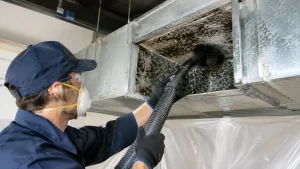
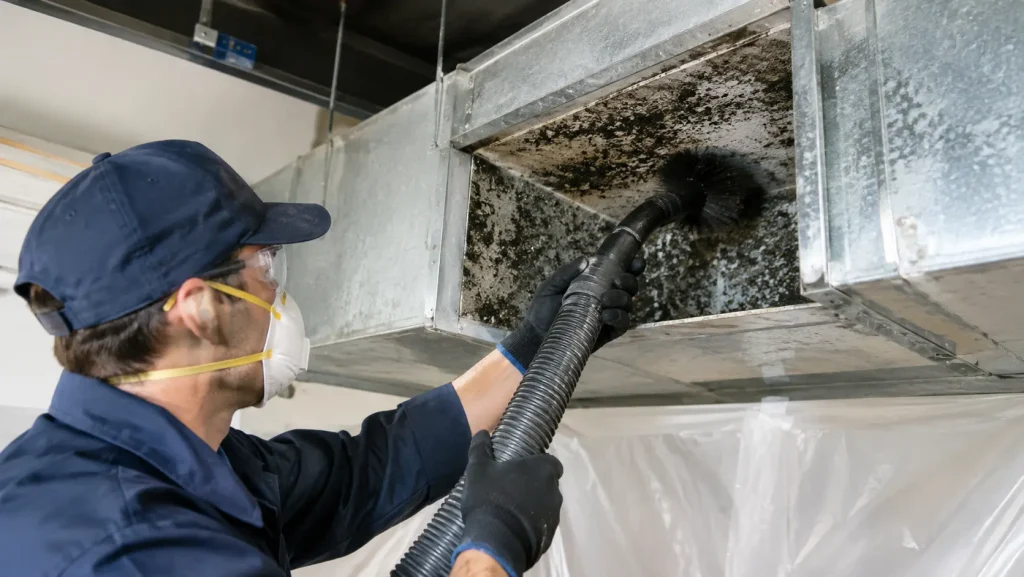
- Contain the affected area: Proper containment helps prevent mold particles from spreading through the home during cleaning.
- Clean the affected components: Appropriate professional methods are used to remove mold and accumulated debris from suitable, cleanable HVAC surfaces.
- Replace contaminated porous materials when necessary: Moldy duct insulation and other porous materials may need replacement rather than simple surface cleaning.
- Address the underlying HVAC problem: After cleaning, the system should be kept dry and properly maintained to reduce the chance of mold returning.
Important:
Don’t assume that a musty smell automatically means mold is growing inside your ducts. Don’t risk spreading contamination by trying to handle extensive growth yourself. If you suspect mold, Omega Duct Cleaning can inspect your HVAC system. We identify signs of contamination and recommend the right next step based on what we find.
Why Does Mold Grow Inside Air Ducts?
Mold needs moisture, a suitable surface, and a food source. Duct systems normally stay relatively dry, but condensation, leaks, standing water, high humidity, or contaminated insulation can create conditions where mold grows.
The cooling side of an HVAC system is particularly important because air conditioning removes moisture from indoor air. If condensate cannot drain properly, water can collect around coils, drain pans, or other components.
Dust and debris can then provide additional organic material for microbial growth.
Common Sources of Moisture That Trigger Mold Growth
- Condensation around cooling coils
- Clogged or poorly draining condensate pans
- Blocked condensate drain lines
- Leaks in or around the HVAC system
- Poorly sealed or insulated ductwork
- High indoor humidity
- Water intrusion from roofs, walls, or plumbing
- Flooding or previous water damage
In Teaneck, seasonal changes can make moisture control important throughout the year. Keeping indoor humidity under control and addressing leaks or condensation early can help reduce conditions that support mold growth.
What Does Mold Look Like Inside Air Ducts?
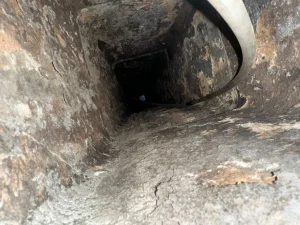
Mold inside ductwork may appear as dark, green, white, gray, or fuzzy patches, but appearance alone cannot reliably confirm that a substance is mold. Dust, dirt, and other buildup can sometimes look similar.
A musty or earthy odor can also be a warning sign, particularly when it becomes noticeable when the HVAC system operates. Look for visible growth, moisture damage, musty odors, and standing water around HVAC equipment when investigating possible mold.
Signs Mold is Growing Inside Air Ducts
- Musty odor coming from supply vents
- Visible growth around registers or accessible duct surfaces
- Persistent moisture around the air handler
- Water collecting in or around the condensate pan
- Previously flooded or water-damaged ductwork
- Mold growth near HVAC equipment
- Recurring mold after previous cleaning
- Damp or deteriorating duct insulation
A dirty vent does not automatically mean the duct system contains mold. If a service provider says mold is present, ask to see the suspected contamination whenever practical.
Can Air Duct Cleaning Prevent Mold From Coming Back?
Cleaning contaminated ductwork can remove what is already there, but it doesn’t eliminate the conditions that allowed mold to grow in the first place. If a leaking drain pan, excessive humidity, wet insulation, or another moisture problem remains, mold can return even after the HVAC system has been cleaned.
That makes moisture control just as important as cleaning. Before treating the contamination, identify why the system became damp and correct the underlying problem. Once the source of moisture is addressed, keeping the HVAC system clean and dry can help reduce the conditions mold needs to grow.
Tips To Avoid Mold Growth in Air Ducts
- Water leaks: Repair leaks before cleaning contaminated areas.
- Condensation: Identify why moisture is forming and correct insulation, airflow, or equipment issues where appropriate.
- Drainage problems: Make sure condensate pans drain correctly and drain lines are clear.
- High humidity: Keep indoor humidity under control rather than allowing damp conditions to persist.
- Wet insulation: Replace contaminated porous duct material when it cannot be effectively cleaned.
The most important step is correcting the conditions that caused the mold. Otherwise, cleaning may only provide a temporary result.
What Parts of an HVAC System Can Mold Affect?
Mold is not limited to the visible portion of the ductwork. If moisture is present, several HVAC components may become contaminated.
Supply and Return Ducts
Hard-surface ducts can collect dust, moisture, and biological growth. When substantial visible mold is present on cleanable surfaces, professional cleaning may be appropriate.
Evaporator Coils
Cooling coils can collect condensation as they remove moisture from indoor air. Poor maintenance or drainage problems can create conditions that support biological growth.
Condensate Pans
These pans collect water produced during air conditioning. Standing water or accumulated debris can signal a drainage or maintenance problem that needs attention.
Duct Insulation
Fiberglass and other porous insulation materials require special attention. Once wet or moldy, they may not be effectively cleaned and can require removal and replacement.
Air Handler
The air handler contains components that directly interact with the air moving through the HVAC system. If moisture or mold is present here, cleaning only the visible duct openings may leave part of the problem behind.
What Is the Difference Between Air Duct Cleaning and Mold Remediation?
These two services are related, but they are not the same thing.
| Air Duct Cleaning | Mold Remediation |
| Removes accumulated dust and debris from ductwork and HVAC components | Addresses a confirmed mold contamination problem |
| Can remove mold from certain cleanable surfaces | Includes removing or treating contaminated materials as appropriate |
| Focuses on the HVAC system | May involve the HVAC system and surrounding building materials |
| Does not automatically fix moisture problems | Requires addressing the moisture source |
| Uses specialized cleaning equipment | Uses containment, removal, cleaning, and other remediation procedures depending on the situation |
If mold is limited to cleanable HVAC surfaces, professional duct cleaning may be part of the solution. If the contamination extends into wet insulation, drywall, ceilings, flooring, or other building materials, a broader mold-remediation approach may be necessary.
Should You Run the HVAC System If You Suspect Mold?
When you strongly suspect that the HVAC system itself is contaminated with mold, continuing to run the system may distribute contamination through the building.
This is especially important after flooding or significant water damage. If the HVAC system has been exposed to water or visible mold, professional evaluation and cleaning should come before normal operation whenever practical.
Extreme temperatures can make shutting down the system impractical, so contact a qualified professional promptly rather than continuing to operate a potentially contaminated HVAC system without an assessment.
When Should You Have Your Air Ducts Cleaned for Mold?
Duct cleaning is not something every home needs on a fixed schedule. It makes more sense when there is a specific reason to inspect or clean the system.
You should consider professional evaluation when:
- There is substantial visible mold inside hard-surface ducts
- Mold is visible on HVAC components
- The HVAC system has been exposed to significant water damage
- There is persistent musty odor associated with the HVAC system
- Ductwork or components have become wet
- There is excessive dust or debris being released from supply registers
- The system has a history of moisture problems
- Mold keeps returning after previous cleaning
If the duct system contains wet or moldy fiberglass insulation, cleaning may not be enough. Porous insulation may need to be removed and replaced rather than repeatedly treated.
How Much Does Mold-Related Air Duct Cleaning Cost?
There is no reliable one-size-fits-all price for mold-related duct cleaning. The cost of air duct cleaning depends on the size and configuration of the HVAC system, number of ducts, accessibility, contamination level, materials involved, and whether additional HVAC or mold-remediation work is required.
| Factor | Why It Changes the Cost |
| System size | Larger systems take more time and equipment |
| Number of vents | More registers and branches increase labor |
| Contamination level | Heavy contamination requires additional cleaning |
| Accessibility | Difficult-to-reach components take longer to service |
| Duct material | Different materials require different cleaning approaches |
| Mold remediation | Confirmed mold can require work beyond standard duct cleaning |
| Damaged insulation | Removal and replacement adds material and labor costs |
| Moisture repairs | Leaks, drainage, or HVAC problems may need correction before cleaning |
Be cautious of companies that quote a very low price before inspecting the system and then add expensive treatments after arriving. A proper assessment should explain what is contaminated, what actually needs to be cleaned, and why.
How to Choose an Air Duct Cleaning Company for a Mold Problem
Mold-related HVAC work requires more than a vacuum and a brush. You should hire an air duct cleaning company that understands both the duct system and the moisture conditions that caused the problem.
When you hire a company, ensure to ask:
What They Found
If a company says your ducts contain mold, ask them to show you the suspected contamination whenever practical. This helps distinguish an actual mold concern from ordinary dust and debris.
What Material Is Affected
Sheet metal, flexible duct, duct board, and internally lined systems do not respond to cleaning in exactly the same way. The material affects what can be safely cleaned and what may need replacement.
About the Moisture Source
If nobody investigates why the system became wet, cleaning may only provide a temporary result.
What Happens to Contaminated Insulation
If fiberglass insulation is wet or moldy, ask whether replacement is required rather than assuming it can simply be sprayed and cleaned.
About the Entire HVAC System
Cleaning only the first few feet of ductwork does not address contamination elsewhere in the system. The relevant components should be evaluated so contaminated areas are not simply left behind.
How to Prevent Mold Growth in Air Ducts
The best mold treatment is preventing the moisture conditions that allow it to grow.
- Keep indoor humidity under control.
- Keep condensate pans clean and draining properly.
- Repair HVAC and plumbing leaks promptly.
- Check for standing water around cooling equipment.
- Keep ducts properly sealed and insulated where needed.
- Replace HVAC filters according to system and manufacturer requirements.
- Address water damage quickly.
- Keep wet materials from remaining damp for extended periods.
- Have recurring moisture problems investigated instead of repeatedly cleaning the visible mold.
Moisture control is the foundation of mold prevention. If the environment remains damp, mold can continue to return even after contaminated surfaces have been cleaned.
Air Duct Cleaning vs DIY Mold Removal
If you can see a small amount of mold on an accessible hard surface, cleaning may be possible depending on the material and circumstances. But HVAC systems are different because contamination can be hidden inside ducts, air handlers, insulation, coils, and other components.
Professional attention is especially important when HVAC contamination is suspected, particularly after significant mold growth or water damage.
Do not open up ductwork or disturb suspected mold simply to get a closer look if doing so could spread contamination.
Also Read: Does Air Duct Cleaning Actually Make a Difference in Your Home?
Does a Musty Smell Always Mean Mold in the Air Ducts?
No. A musty smell can indicate mold, but it does not prove that mold is growing inside the ductwork. The odor may come from the air handler, evaporator coil, drain pan, insulation, surrounding building materials, or another moisture-affected area.
That is why chasing the smell with deodorizer or fragrance is not a solution. Find the source first.
Final Takeaway: Does Air Duct Cleaning Really Remove Mold?
Air duct cleaning can remove mold contamination from certain hard, cleanable HVAC surfaces, but it is not a substitute for complete mold remediation or moisture control.
Mold growing inside sheet-metal ductwork or on accessible HVAC components calls for professional cleaning. Wet or moldy fiberglass insulation, however, may need to be removed and replaced rather than cleaned. Most importantly, any leak, condensation problem, or excess humidity that caused by the mold must be corrected, or the growth can return.
Omega Duct Cleaning provides professional air duct cleaning in Teaneck, NJ, helping you identify buildup, contamination, and HVAC conditions that may contribute to that musty smell. Instead of guessing at the source or masking the odor, have your system evaluated to find out what’s actually causing the problem.
A cleaner HVAC system starts with more than removing what you can see. It starts with finding the source and addressing what allowed the contamination to develop.
Frequently Asked Questions
Can air duct cleaning completely remove mold?
It can remove mold contamination from some hard, cleanable HVAC surfaces, but it cannot guarantee that every mold problem in a building is eliminated. If mold has contaminated porous insulation or surrounding building materials, those materials may require removal or replacement.
Does Air Duct Cleaning Kill Mold?
Cleaning and killing mold are not the same thing. The goal is to remove mold contamination from affected materials, not simply spray something over it. The objective should be to remove mold growth by cleaning or removing contaminated materials. Spraying a chemical over visible growth does not solve the underlying moisture problem and should not be treated as a substitute for proper cleaning or remediation.
Will mold come back after air duct cleaning?
It can if the moisture source remains. Leaks, condensation, standing water, high humidity, or wet insulation can create the same conditions that allowed mold to grow in the first place.
Should I clean my air ducts if I smell mold?
A musty smell is a reason to investigate, not proof that the ducts themselves contain mold. Have the HVAC system and surrounding areas checked for visible growth and moisture before deciding what treatment is necessary.
Can mold grow inside air conditioning ducts?
Yes. Mold can grow in HVAC systems when moisture is present. Condensation, leaks, standing water, high humidity, and wet insulation can create favorable conditions for growth.
Can moldy fiberglass ductwork be cleaned?
Wet or moldy fiberglass duct material generally cannot be effectively cleaned and may need to be removed and replaced. This is different from hard-surface sheet-metal ductwork, which may be cleanable.
Does air duct cleaning get rid of mold spores?
Cleaning can remove contamination from affected HVAC surfaces, but mold spores are naturally present in indoor and outdoor environments. The goal is to remove active or settled mold growth and control the moisture conditions that allow it to multiply.
Should I use bleach inside my air ducts?
Do not assume that bleach or household disinfectants are appropriate for ductwork. HVAC materials vary, and improper moisture or chemical use can create additional problems. Suspected HVAC mold should be evaluated using an appropriate cleaning or remediation approach.
Does duct cleaning prevent mold?
Not by itself. Keeping the HVAC system dry, controlling indoor humidity, repairing leaks, maintaining condensate drainage, and addressing water damage are more important for preventing mold from returning.
When should I call a professional for mold in my HVAC system?
Call a qualified professional when you see substantial mold growth inside hard-surface ducts, suspect contamination after water damage, notice persistent musty odors associated with the HVAC system, find wet or moldy insulation, or cannot identify the source of recurring moisture.