The U.S. Consumer Product Safety Commission reports that dryer vent fires cause an estimated $35 million in property damage every year across the country. The National Fire Protection Association adds that failure to clean dryer vents is the leading factor in dryer-related house and building fires.
If you own or manage a property in Bergen County, whether it is a laundromat, apartment complex, hotel, medical facility, or a single-family home, checking your dryer vent is one of the simplest maintenance tasks you can do.
This blog walks through how to check your dryer vent from the inside and outside of your building, what to look for, and when it is time to call a professional for dryer vent cleaning in Bergen County.
Step One: Check the Lint Trap and the Area Around It
The lint trap is the first checkpoint. Over time, residue from dryer sheets and fabric softener builds up on the screen and reduces its ability to catch lint. If you hold the screen under running water and the water pools on top instead of passing through, the screen needs a deeper cleaning with soap and a brush.
Beyond the screen, check the housing where the lint trap is. Pull the trap out and use a flashlight to look down into the slot. You will notice lint collecting along the sides and bottom of that housing. A narrow vacuum attachment or a lint trap brush, which is a long, flexible brush made for this purpose, can pull that debris out.
In a commercial laundry facility, this area should be checked and cleaned at least once a week, not just between loads.
Also Read: Why Do NADCA Standards Matter For Air Duct Cleaning?
Step Two: Inspect the Vent Connection Behind the Dryer
Pull the dryer away from the wall far enough to see the vent connection at the back. This is where the dryer exhaust connects to the vent duct that runs to the exterior of the building. Look at the type of hose or duct being used.
What to Look For Behind the Machine
If the connection is a flexible plastic or foil hose, that is a problem. These materials crush and kink, which creates points where lint accumulates and airflow drops. If your property still uses flexible plastic hoses, replacing them with metal is a low-cost upgrade that reduces clogging and fire risk.
Check the connection points at both ends of the hose or duct. The clamps should be tight. If the hose has pulled loose from the wall vent or the dryer exhaust port, hot air and lint are blowing into the space behind the dryer instead of going outside. This is a common issue in both residential and commercial settings.
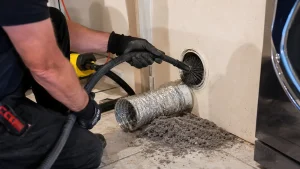
Also, look for lint buildup around the connection. If you see lint collecting on the floor behind the dryer or around the vent opening in the wall, that is a sign that lint is escaping the system because of a loose connection or a blockage further down the line.
Step Three: Go Outside and Check the Exterior Vent Cap
Dryer vent line ends at an exterior opening on the outside of the building. This is where the hot air exits. The opening should have a vent cap or flap that opens when the dryer is running and closes when it is not, to keep weather, pests, and debris out of the line.
Walk to the exterior vent while the dryer is running and hold your hand near the opening. You should feel a steady flow of warm air pushing out. If the airflow feels weak or you feel no air at all, the line is restricted or blocked somewhere between the dryer and the exterior.
Look at the vent cap itself. If lint is visible around the edges of the flap, or if the flap does not open when the dryer is on, the cap is clogged, or the vent line behind it is blocked. On commercial buildings, exterior vents are sometimes located on the roof or high on the wall, which makes them harder to inspect without equipment. These locations also tend to collect more debris because they are exposed to weather and are not checked as often.
For multi-story commercial properties and apartment buildings in Bergen County, exterior vent inspections should be part of the building’s regular maintenance schedule.
Step Four: Measure How Long Your Dryer Takes to Complete a Cycle
This is one of the simplest ways to check if your vent has a problem, and it requires no tools. Pay attention to how long it takes for a standard load of laundry to dry. A residential dryer with a clear vent should complete a regular load in 35 to 50 minutes, depending on the fabric type and load size. A commercial dryer should complete a cycle within the time listed on the machine for that cycle setting.
If clothes are taking 70, 80, or 90 minutes to dry, or if they need a second cycle to finish, the vent is restricted. The dryer is producing heat, but the moist air is not leaving the machine fast enough because the vent cannot handle the airflow. The dryer compensates by running longer, which wastes energy and puts stress on the heating element, motor, and thermal fuse.
Scheduling dryer vent cleaning in Bergen County at that point prevents the machine from breaking down and keeps the operation running on schedule.
Step Five: Feel the Outside of the Dryer During a Cycle
While the dryer is running, place your hand on the top and sides of the machine. It should feel warm. If it feels hot to the point where you do not want to keep your hand on it, the dryer is overheating because the heat is not escaping through the vent.
Overheating is the most common cause of premature dryer failure. The heating element works harder than it should. The thermal fuse blows to protect the machine. The motor runs under conditions it was not built for. Over time, these components fail one by one, and each replacement costs money that could have been avoided with regular vent maintenance.
Signs That Your Dryer Vent Needs Professional Cleaning
Some vent problems can be spotted during a basic check, but others require professional equipment to identify and resolve. If you notice any of the following, schedule a professional service.
- The dryer shuts off before the cycle is complete, which usually means the thermal fuse has tripped due to overheating.
- There is a burning smell during operation, which can indicate that lint near the heating element has reached a temperature close to ignition.
- Lint is visible outside the vent cap or around the vent connection behind the dryer despite regular cleaning of the lint trap.
- The vent line runs more than 15 feet from the dryer to the exterior, or it has more than two 90-degree turns, both of which increase the chance of lint accumulation in sections you cannot reach on your own.
- Multiple tenants or customers in a commercial building report that dryers are not drying well at the same time, which points to a shared vent line blockage.
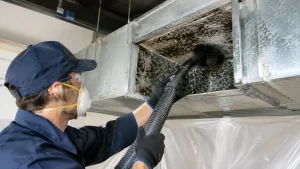
Professional dryer vent cleaning in Bergen County involves using rotating brush systems and high-powered vacuums that clear lint from the full length of the vent line.
Read More: How Often Should Commercial Duct Cleaning Be Done?
How Often to Check and Clean Dryer Vents Based on Property Type
The right cleaning schedule depends on how many dryers you have and how often they run. There is no single rule that applies to every property, but these guidelines help you set a schedule that matches your usage.
Residential Properties (1 to 2 dryers):
- Inspect the vent yourself every three months
- Schedule professional cleaning at least once a year
Commercial Laundromats and Laundry Facilities:
- Clean vents every three to four months
- High-volume facilities running dryers 12 or more hours a day should clean every two months
Multi-Unit Apartment Buildings and Condos:
- Schedule dryer vent cleaning in Bergen County at least twice a year for shared vent systems
- Inspect individual unit connections every three months
Hotels, Hospitals, Nursing Homes, and Care Facilities:
- Follow a three to six month cleaning cycle, depending on the volume of laundry processed
- These properties generate lint at a higher rate because of the fabric types and the frequency of washing and drying cycles
- Facilities running industrial dryers on multiple shifts should lean toward the three month schedule
Professional Dryer Vent Inspection in Bergen County
Every day a clogged dryer vent goes unchecked, the lint builds up a little more. The dryer works a little harder. The energy bill goes up a little higher. The risk of fire grows a little closer.
Contact Omega Duct Cleaning today to schedule your dryer vent cleaning in Bergen County. We clear the full vent line, inspect the system for damage, and get your airflow back to where it needs to be. Whether you run one dryer at home or manage a building with dozens of machines, the time to act is now, not after the next breakdown.