As a homeowner, you’ve probably gotten one of those flyers in the mail that promise to clean your house air ducts for only $79. Or maybe you’ve seen a Facebook ad promising to clean unlimited vents for one low price.
And maybe, just maybe, you might have thought it’s not a bad deal, and it wouldn’t hurt to give it a try.
The only catch, however, is that those too-good-to-be-true offers usually are. The air duct cleaning industry is plagued with scammers running what’s known as blow-and-go operations that either do terrible work or disappear with your money entirely.
Which makes you wonder, how do you tell the difference between legitimate air duct cleaners and companies looking to take advantage of you?
The answer is NADCA certification. And if you’ve never heard of NADCA, buckle up, because understanding what it means could save you from wasting money.
What is NADCA?
NADCA stands for the National Air Duct Cleaners Association. It’s a non-profit trade association formed in 1989 by air duct cleaning professionals who were fed up with seeing questionable practices in the industry.
The organization’s mission is straightforward, promote proper HVAC cleaning methods, establish standards, and protect consumers from scams. Today, NADCA has over 1,500 member companies and is recognized internationally as the authority on HVAC system cleaning and restoration.
To become a full member, companies must:
- Actively perform residential, commercial, or industrial duct cleaning services
- Have at least one full-time staff member who holds NADCA’s Air Systems Cleaning Specialist (ASCS) certification
- Sign and uphold NADCA’s Code of Ethics
- Maintain proper insurance coverage
- Invest in training and continuing education for their technicians
In other words, NADCA membership signals that a company has put in the work to do things right.
ACR is The NADCA Standard
When NADCA talks about standards, they’re referring to ACR (Assessment, Cleaning, and Restoration), the comprehensive document outlining best practices for HVAC system cleaning. The 2021 version is used worldwide by commercial projects and residential consumers who want proper service.
ACR covers how to inspect systems before cleaning, which equipment and methods to use, how to perform source removal, safety protocols, and verification procedures to confirm cleanliness.
Hiring companies that follow ACR standards means they can’t cut corners. They must use proper equipment, clean the entire system, and verify that the job was done right.
What Certifications to Look For
NADCA offers two major certifications that demonstrate expertise:
1. Air Systems Cleaning Specialist (ASCS)
This is the foundational certification for duct cleaning technicians. To earn it, individuals must complete intensive training that covers:
- How HVAC systems function
- Proper cleaning techniques that won’t damage equipment
- Health and safety protocols
- Industry standards and ethics
ASCS-certified technicians understand that air duct cleaning in Bergen County and anywhere else isn’t just about making ducts look clean. It’s about doing the work safely, thoroughly, and correctly.
Every NADCA member company must have at least one ASCS-certified technician on staff. When you hire a NADCA member, you know there’s someone involved who has been trained and tested on proper methods.
2. Certified Ventilation Inspector (CVI)
This is an advanced certification for professionals who specialize in HVAC system inspection. To even sit for the CVI exam, you must already hold an active ASCS certification. The CVI exam covers:
- HVAC systems and components
- Indoor air quality issues
- Performing thorough inspections
- Risk management
- Industry standards and practical application
CVI certification is recognized worldwide and is often required for commercial inspection work. Companies with CVI-certified inspectors bring an extra level of expertise to both residential and commercial projects.
Also Read: Best Time of Year to Clean Home Ducts (and Why)
What Do NADCA Standards Require?
Here’s where you can really see the difference between legitimate air duct cleaners and companies cutting corners.
1. Source Removal
NADCA standards mandate source removal, which means physically removing contaminants from your HVAC system.
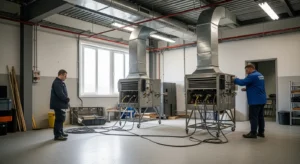
Source removal works by placing the entire HVAC system under continuous negative pressure using a powerful vacuum. This prevents dust and debris from spreading into your living space during cleaning.
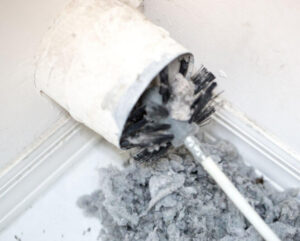
Then, technicians use specialized tools such as rotary brushes, air whips, and compressed air nozzles to physically dislodge accumulated dirt from duct surfaces. The vacuum system captures and removes all this loosened material.
Blow-and-go scammers skip this step entirely. They might stick a vacuum hose in one register and call it a day, leaving most of your system untouched. Or they’ll agitate dust without proper containment, which actually makes your indoor air quality worse.
2. The Entire System Gets Cleaned
Your air ducts are just one part of your HVAC system.
A proper cleaning includes:
- Supply and return ducts
- Registers and grills
- Diffusers
- Coils and drip pans
- Heat exchangers
- Air handling unit components
- Blower motor and housing
Cleaning just the ducts and ignoring the rest is like washing your car but leaving the engine covered in grime. It simply doesn’t make sense. NADCA standards require cleaning all components because contamination in any one area will eventually spread through the whole system.
3. Visual Inspection
Before cleaning begins, NADCA-certified companies inspect your system to assess contamination levels and identify any issues like damaged ductwork and mold growth. After cleaning, they verify that the work was done properly through post-cleaning inspection.
Many companies even provide photo or video documentation showing before-and-after conditions.
4. No Damaging Your System
NADCA standards explicitly prohibit techniques that could damage HVAC components. Fiberglass-lined ducts, flex ducts, and duct board require careful handling. Overly aggressive brushing or improper equipment can tear linings, create leaks, or compromise system integrity.
Certified companies know how to match cleaning methods to duct materials.
What Does a Proper Service Cost?
Let’s talk money, because pricing is where confusion happens.
Legitimate air duct cleaning in Bergen County for a home typically costs $450-$1,000. Some companies charge per square foot ($0.15-$0.40) or per vent ($25-$50 per supply, $40-$75 per return).
If you’re wondering why these prices are so high, that’s because professional vacuum systems with HEPA filtration cost tens of thousands of dollars. Rotary brushes, compressors, cameras, and specialized tools add up. ASCS-certified technicians earn professional wages for their training. Proper cleaning takes 3-6 hours. NADCA members maintain insurance coverage to protect you if something goes wrong.
Companies advertising low prices for cleaning simply cannot deliver quality service at that price. The math simply doesn’t add up. They’re either doing inadequate work, planning aggressive upsells, or running a scam.
How Do You Find Legitimate Air Duct Cleaners?
When you’re ready to schedule air duct cleaning in Bergen County, how do you know who to trust?
Start with NADCA’s directory. Enter your zip code to see legitimate members in your area. Verify any certification claims, click their NADCA logo, or look them up directly on the website.
Now is also a good time to ask specific questions. How many ASCS-certified technicians do you have? Do you follow ACR standards? What equipment do you use? How long will the service take? Companies that answer knowledgeably are far more likely to be legitimate.
It’s also a good idea to get everything in writing before work begins. This includes the scope of work, estimated time, total cost, and payment terms. Reasonable deposits are fine; demands for full payment upfront are red flags.
Make sure to check online reviews on Google, Yelp, and the Better Business Bureau, and look for patterns. Consistent complaints about bait-and-switch tactics or incomplete work are serious warnings.
If something feels off, pressure for immediate decisions, reluctance to provide written estimates, evasiveness about certification, walk away. Legitimate companies are transparent and professional.
The NADCA Standards Protect You
NADCA certification and ACR standards exist because the air duct cleaning industry has real problems with fraud and incompetence. Without these standards, consumers have no way to separate legitimate professionals from scammers.
When you hire a NADCA member company that follows ACR standards, you’re getting:
- Technicians with verified training and certification
- Proper equipment that won’t damage your system
- Source removal methods that actually work
- Complete system cleaning, not just the visible parts
- Accountability through inspection and documentation
- Companies committed to ethical business practices
Is it more expensive than those shady ads you see floating around your Facebook groups? Yes. But you’re getting a real service that protects your investment in your HVAC system and your home’s air quality.
Cutting corners with a cheap, uncertified company can cost you far more in the long run through system damage, wasted money on ineffective service, or even health issues from improperly handled contamination.
Skip the Scams. Get Real Air Duct Cleaning in Bergen County
If you’re ready for real air duct cleaning, Omega Duct Cleaning has you covered. We provide legitimate, NADCA-certified air duct cleaning that follows ACR standards and cleans your entire HVAC system.
Our ASCS-certified technicians show up with professional-grade equipment and use proper source removal methods. No shortcuts, no guesswork, and no gimmicks.
Scams and blow-and-go services are everywhere; don’t fall for them. Choose air duct cleaning in Bergen County that protects your home, keeps your HVAC system running right, and helps your family breathe a little easier. Clean ducts, clean air, peace of mind, done the right way. Give us a call today.