When most people think about air duct cleaning in Bergen County, they picture a technician showing up at their house, cleaning a few vents, and leaving within a couple of hours.
That’s a pretty accurate picture of residential air duct cleaning in Bergen County. However, commercial air duct cleaning in Bergen County is considerably different.
The difference comes down to complexity, regulations, equipment, timing, and the stakes involved. A residential job might affect one family’s comfort. A commercial job can impact hundreds of employees, regulatory compliance, business operations, and even public health.
If you’re a property manager, facility director, or business owner trying to understand what makes commercial duct cleaning different, here’s everything you need to know.
1. The Job Scales are Entirely Different
Let’s start with the most obvious distinction: size.
Residential HVAC systems serve individual homes. They’re typically straightforward, with ductwork designed to heat and cool anywhere from 1,000 to 4,000 square feet. Most homes have a single air handler, one furnace or air conditioner, and relatively accessible ductwork.
Commercial buildings are an entirely different world.
An office building usually has multiple HVAC systems serving 50,000 square feet or even more. This includes retail spaces, hospitals, schools, and manufacturing facilities, which can have systems spanning hundreds of thousands of square feet.
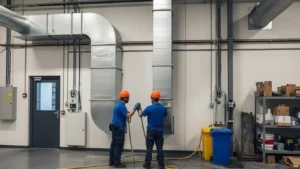
To make matters more complex, commercial ductwork runs through multiple floors, across rooftop units, through mechanical rooms, and into areas that require special access equipment.
Commercial buildings also require annual inspections to determine cleaning needs, whereas residential systems can typically go 3-5 years between cleanings. That difference alone tells you something about the wear and usage of these systems.
2. The Equipment Used are Poles Apart
A typical residential air duct cleaning in Bergen County job involves portable vacuum units, handheld brushes, rotary tools, and compressed air equipment.
These are fairly standard tools and work perfectly for homes since they’re designed to handle the scale and complexity of residential ductwork.
But try using that same equipment on an office building, and you’ll quickly understand why commercial cleaning is entirely different.
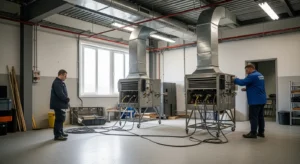
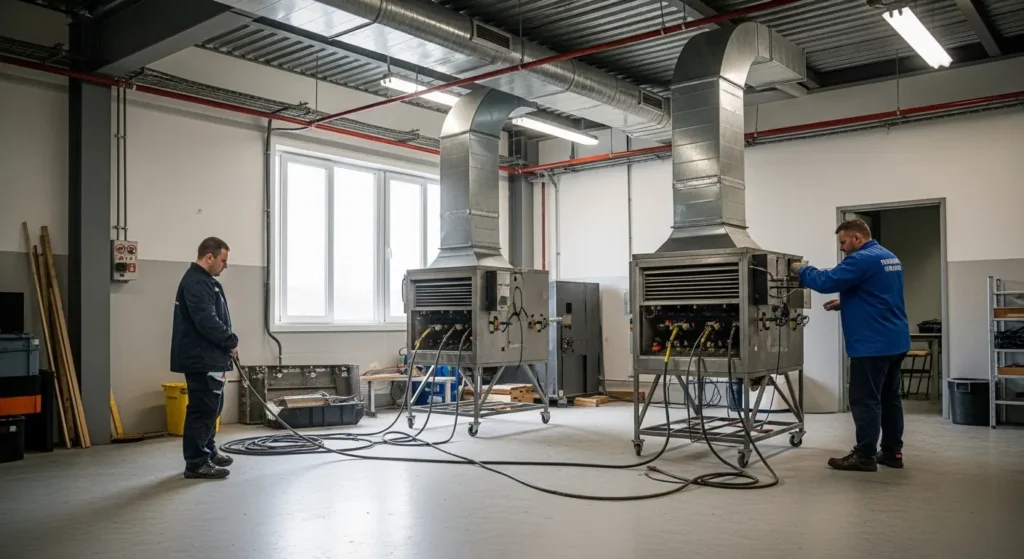
Commercial air duct cleaning in Bergen County demands heavy-duty, industrial-grade equipment. We’re talking about negative air machines that create powerful negative pressure systems capable of handling massive airflow volumes. These machines require truck-mounted systems or industrial equipment that stays outside while technicians work through the building.
It’s worth noting that the tools are more aggressive, too. Commercial jobs often require cutting access holes in ductwork because the systems are too large to clean from existing access points. Technicians use electric shears, drills, and industrial-grade brushes designed to dislodge years of accumulated debris from large-diameter ducts.
And once the cleaning is done, those access points need to be professionally sealed and patched, an additional step that residential jobs rarely require.
Also Read: Why Do NADCA Standards Matter For Air Duct Cleaning?
3. The Type of Contamination and Extent Varies
Homes accumulate dust and typical household debris. It’s predictable stuff that comes from everyday living, cooking, pets, and people bringing things in from outside via clothing and shoes.
The contamination in commercial environments, on the other hand, is often far more diverse and potentially hazardous.
Office buildings deal with high foot traffic, which means more dust and outdoor pollutants are constantly introduced. Paper dust from printers and copiers, cleaning chemical residues, and the accumulated debris from hundreds of people using the same space daily.
Restaurants and commercial kitchens face grease buildup along with food particles, smoke residue, and intense humidity. These environments require cleaning far more frequently than typical commercial spaces, sometimes quarterly or even monthly, depending on volume.
Healthcare facilities have the highest stakes of all. Hospitals must maintain sterile environments, which means that ductwork contaminated with bacteria, viruses, or airborne pathogens poses serious risks to vulnerable patients. These facilities follow infection control protocols that go far beyond standard cleaning requirements.
Manufacturing and industrial facilities might have chemical residues, industrial dust, metal shavings, or even combustible dust hazards.
4. Differing Regulatory Requirements
Homeowners can generally clean their ducts whenever they want. There are no legal requirements, no compliance standards, no inspection mandates. It’s entirely at the homeowner’s discretion.
Commercial buildings are held to an entirely different standard.
OSHA regulations govern workplace air quality, which means commercial buildings must maintain HVAC systems that don’t expose employees to harmful contaminants. Poor air quality that leads to employee illness can trigger OSHA violations and fines.
ASHRAE standards (American Society of Heating, Refrigerating and Air-Conditioning Engineers) provide guidelines for commercial HVAC maintenance that many industries must follow or risk failing inspections.
NADCA’s ACR Standard (Assessment, Cleaning, and Restoration) is the globally recognized benchmark for HVAC system cleaning and restoration. Following this standard makes sure of compliance with various regulatory bodies and helps commercial properties avoid liability.
5. The Workforce and Time Commitment Are at Odds
A typical residential air duct cleaning in Bergen County might require one or two technicians working for 2-4 hours. The great part about this is that you might not even need to be present for the entire job. It’s relatively quick, minimally disruptive, and usually completed in a single visit.
Commercial jobs operate on an entirely different scale.
- Large workforce requirements: A commercial building might need a team of 5-10 technicians working in coordination.
- Extended timelines: Small offices might be cleaned over a weekend. Medium-sized buildings could take a full week. Large facilities might require weeks of work.
- Off-hours scheduling: Commercial buildings can’t shut down for cleaning. The work must be scheduled during non-operational hours to avoid disrupting business operations.
- Coordination requirements: Commercial jobs require extensive coordination with facility managers, building security, IT departments, and sometimes multiple tenants in the building. Everyone needs to be notified about when systems will be offline and what areas will be affected.
6. Inspection and Documentation are Different
Residential duct cleaning is pretty straightforward; you inspect, clean, verify, and are done. Maybe take a few before-and-after photos to show the homeowner what was accomplished.
Commercial cleaning involves documentation that becomes part of the building’s maintenance records.
- Pre-cleaning inspection: Commercial jobs start with detailed assessments using inspection cameras. Technicians document every component, photograph contamination levels, identify problem areas, and create a comprehensive scope of work. This documentation is used for pricing, planning, and establishing baseline conditions.
- During-cleaning documentation: Progress photos, work logs, any issues encountered, any unexpected findings, all of this gets documented in real-time.
- Post-cleaning verification: After cleaning, independent verification ensures the work meets NADCA standards. This includes visual inspections, airflow measurements, and sometimes air quality testing.
- Compliance records: All of this documentation needs to be maintained for regulatory compliance. OSHA audits, insurance reviews, and health department inspections prove the facility is maintaining air quality standards.
7. The Costs For Both Jobs are Miles Apart
Residential air duct cleaning in Bergen County typically ranges from $400 to $600 for an average home, up to $1,000 for larger houses with multiple systems.
The starting point for commercial air duct cleaning in Bergen County is $1,000-$2,000, and that’s just for very small commercial spaces. Medium-sized buildings commonly run $5,000-$15,000. Large facilities can easily exceed $50,000.
The price difference comes down to:
- Labor costs: Multiple technicians working for days or weeks instead of a couple of technicians for a few hours.
- Equipment costs: Industrial-grade equipment is more expensive to operate and maintain than residential tools.
- Specialized access requirements: Scissor lifts, scaffolding, rooftop access equipment, all of this adds to the expense.
- After-hours: Night and weekend work typically comes with higher labor rates.
- Regulatory compliance: Documentation, verification, and adherence to standards require additional time and expertise.
- Liability and insurance: Commercial cleaning carries higher liability risks and requires more comprehensive insurance coverage, which factors into pricing.
Read More: How Often Should Commercial Duct Cleaning Be Done?
When to Call Commercial Specialists
Duct cleaning companies that handle residential work aren’t always equipped for commercial projects. The skills, equipment, certifications, and experience required are entirely different.
Look for commercial cleaning specialists who have:
- NADCA certification: NADCA members must have Certified Air System Cleaning Specialists (ASCS) on staff who have passed rigorous examinations demonstrating extensive knowledge in HVAC design and cleaning methodologies.
- Commercial experience: Ask for references from similar facilities. A company that primarily does residential work won’t have the expertise or equipment for a 100,000-square-foot office building.
- Proper insurance and bonding: Commercial projects require substantially higher liability coverage than residential work.
- Safety protocols: Commercial sites often require OSHA confined space training, fall protection certification, and specific safety procedures. Make sure your contractor has properly trained technicians.
- After-hours availability: If your building operates during business hours, the cleaning company needs to be able to work nights and weekends.
Clean Air Ducts for Commercial Businesses in Bergen County!
Whether you manage a small office building, a retail complex, a school, or a healthcare facility, knowing the differences between residential air duct cleaning in Bergen County and commercial air duct cleaning helps you make informed decisions about maintaining your HVAC systems.
Yes, commercial cleaning costs more. Yes, it requires more planning and coordination. And yes, it’s more disruptive to schedule and execute.
But neglecting commercial duct cleaning comes with far steeper costs. You end up with reduced HVAC efficiency, higher energy bills, premature equipment failure requiring expensive replacements, poor indoor air quality that affects employee health and productivity, regulatory violations and potential fines, and liability exposure if occupants develop health problems from poor air quality.
If it’s been more than a year since your commercial property had an HVAC inspection, or if you’re noticing increased dust, unusual odors, or employee complaints about air quality, it’s time to schedule a professional assessment.
At Omega Duct Cleaning, we specialize in both residential air duct cleaning and commercial air duct cleaning in Bergen County. Contact us to schedule an inspection and receive a detailed scope of work for your facility.