That pile of laundry taking longer to dry could be a warning sign of a much bigger problem hiding behind your dryer.
Lint builds up inside the exhaust vent with every load, gradually restricting airflow and trapping heat where it should not. What seems like a minor inconvenience can lead to higher energy bills, damaged clothing, moisture problems, and even a dryer fire. Ignoring these warning signs can also leave you facing expensive repairs or appliance replacement. Knowing the risks of poor dryer vent maintenance helps you catch problems early, protect your property, and keep laundry day from turning into a costly headache.
Risks of Ignoring Dryer Vent Maintenance
When you ignore dryer vent maintenance, it can lead to more than slow drying. Lint buildup and restricted airflow may increase fire risks, raise energy bills, damage your dryer, and allow moisture to collect where it shouldn’t. Knowing these risks can help you spot early warning signs and avoid costly problems.
-
Fire Hazards Due to Lint Buildup
The lint you remove from your dryer’s filter is only part of the problem. Some lint can travel into the exhaust duct and collect there, restricting airflow and creating a potential fire hazard. The National Fire Protection Association (NFPA) found that in 2010-2014, an estimated average of 15,970 home structure fires involving clothes dryers or washing machines each year. Its research report on home dryer fires explains why dryer maintenance deserves attention.
Cleaning the lint filter after every load is essential, but it does not replace cleaning the exhaust duct. Never ignore a burning smell, smoke, or unusual overheating. Stop using the dryer and seek professional help. If a fire starts, leave the area and contact emergency services.
-
Longer Drying Times
Wet towels go in and the cycle ends, but they come damp. Before running the dryer again, consider what might prevent it from working properly. A clogged vent can restrict the escape of moist air, leaving clothes wet for longer and forcing the machine to run additional cycles.
Check for these changes:
- Loads that regularly need a second cycle
- Towels and bedding that take unusually long to dry
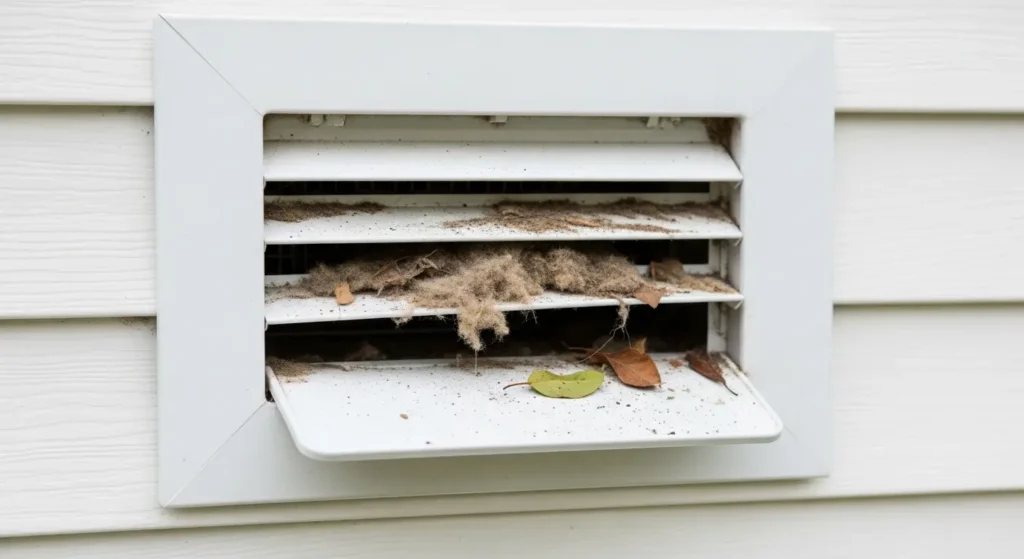
- Weak airflow from the outdoor exhaust opening
- A dryer that feels hotter than usual
Blocked vent is not the only possible cause. Overloading, a dirty lint filter, or a mechanical fault can produce similar symptoms. However, repeated drying delays are a good reason to inspect the system rather than keep restarting the machine.
-
Higher Energy Bills Due to Repeated Cycles
One extra cycle may seem insignificant. Repeating it for every load is a different story. When restricted airflow makes drying less efficient, the machine may need more time to dry the same clothes. That extra operating time can increase energy use, particularly in households that run frequent loads.
Commercial facilities face an additional challenge. Hotels, laundromats, gyms, and other businesses may process dozens of loads daily. Even small delays can affect laundry schedules, staff time, and operating costs. Cleaning a restricted vent can help restore airflow, but the actual energy savings depend on the dryer, the blockage, and other operating conditions.
-
Moisture Problems
Your dryer needs a clear route to release hot, moist air outdoors. If the duct is blocked, damaged, or incorrectly installed, that moisture may not escape as intended. The consequences can extend beyond the laundry room:
- Condensation around the dryer or exhaust connection
- Persistent musty odors
- Dampness in nearby walls or other building materials
- Moisture problems in an attic or enclosed space if the vent discharges there
The U.S. Department of Energy’s Building America Solution Center explains the importance of proper clothes dryer venting, including appropriate exhaust routing and unobstructed airflow. Notice damp patches or persistent moisture near your laundry area? Investigate the source promptly. A vent issue is one possibility, but plumbing leaks and other moisture sources may also need attention.
-
Appliance Wear and Unexpected Repair Bills
Dryers that repeatedly struggle with airflow may run longer than necessary and experience operating conditions outside its intended range. Continued use without addressing the underlying problem can contribute to performance issues. Imagine your dryer failing during a busy week. Laundry piles up, loads remain unfinished, and you now have to arrange a repair. The expense may extend beyond the appliance if the underlying vent problem remains unresolved.
Routine vent inspections help identify lint buildup, obstructions, and visible duct damage. They cannot prevent every breakdown, but they can help you catch ventilation problems before they cause further disruption.
-
Business Disruptions When Clean Laundry Cannot Keep Up
For some businesses, a slow dryer is more than an inconvenience. It can interrupt the work that keeps the operation running.
| Business type | Potential impact |
| Hotels | Delays in preparing fresh towels and bedding |
| Gyms and spas | Fewer clean towels available during busy periods |
| Laundromats | Longer drying times and slower customer turnover |
| Healthcare and care facilities | Added pressure on laundry schedules and linen availability |
Commercial dryers often handle heavier workloads than residential machines. Their maintenance needs depend on usage, duct design, equipment specifications, and lint accumulation. A planned maintenance schedule helps businesses identify problems, manage cleaning intervals, and reduce avoidable interruptions. Waiting until drying performance drops can leave less time to address an issue before it affects daily operations.
Warning Signs Your Dryer Vent Needs Attention
You do not need to wait for a complete blockage before taking action. Changes in your dryer’s performance can provide useful clues.
| Warning sign | What it could indicate |
| Clothes remain damp after a normal cycle | Restricted airflow or another drying problem |
| Dryer feels unusually hot | Possible airflow restriction or appliance fault |
| Burning smell during operation | Potential overheating or lint-related hazard |
| Weak airflow at the outdoor vent | A blockage, obstruction, or venting issue |
| More drying cycles than usual | Reduced performance that needs investigation |
Visible lint around the exterior vent |
Lint accumulation that warrants inspection |
Treat these signs seriously, especially when several appear together. Stop using the dryer if you notice a burning smell or suspected overheating and seek professional assistance. Do not continue running the machine just to see whether the problem disappears.
How Often Should Dryer Vents Be Cleaned?
There is no single schedule that suits every dryer. Cleaning needs depend on how often the machine operates, the length and layout of the duct, the types of laundry being dried, and the amount of lint that accumulates. Residential dryers used regularly may need periodic professional vent cleaning, while commercial systems with heavy daily use may require more frequent attention. Use these practices to stay ahead of buildup:
- After every load: Clean the lint filter according to the manufacturer’s instructions.
- Periodically: Check the outdoor vent opening for visible obstructions and confirm that its flap moves freely when the dryer operates.
- At recommended intervals: Arrange vent cleaning based on usage, the manufacturer’s guidance, and the system’s condition.
- When performance changes: Investigate longer drying times, unusual heat, or other warning signs without waiting for the next scheduled service.
Remember that cleaning the lint filter and cleaning the full exhaust duct are two different tasks. Both matter for dryer safety and performance.
Do Not Wait for a Warning to Become a Bigger Problem
A dryer vent may stay out of sight, but its condition affects fire safety, drying performance, energy use, and the reliability of your appliance. Ignoring lint buildup can turn a simple maintenance need into a much more disruptive problem.
Omega Duct Cleaning can help you address dryer vent buildup before it leads to unnecessary trouble. Whether you need maintenance for your home or a business with frequent laundry demands, professional attention can help identify airflow restrictions and remove accumulated lint from the vent system.
Do not let slow drying become your only warning. Contact Omega Duct Cleaning to discuss your dryer vent cleaning needs and help keep your system operating as it should.
Frequently Asked Questions
- Can a clogged dryer vent cause a fire?
Yes. Lint is flammable, and restricted airflow can contribute to heat buildup. Regular lint-filter cleaning and appropriate vent maintenance help reduce the risk.
- Will cleaning the dryer vent make clothes dry faster?
Cleaning a restricted vent can improve airflow and reduce drying times when the blockage is the cause of the problem. Other appliance or laundry issues may also affect performance.
- Is cleaning the lint filter enough?
No. The filter catches much of the lint, but some can pass into the exhaust duct and accumulate there. The full vent system needs attention as well.
- Can I keep using my dryer if it smells like something is burning?
No. Stop the dryer and do not use it again until the cause has been assessed. If you see smoke or fire, leave the area and contact emergency services.
- Do commercial dryers need more frequent vent cleaning?
They may. High-volume use can increase lint accumulation, so commercial cleaning schedules should reflect workload, vent design, and the equipment manufacturer’s recommendations.