You spent months planning your renovation. The new kitchen looks great, the floors are beautiful, and everything is finally in place. Contractors are gone, and at last, your house feels like home again.
But here’s a question most homeowners never think to ask their contractor: “Where did all that construction dust end up?”
The answer, unfortunately, is your ductwork.
While surface cleaning after a remodel is obvious, the air circulating through your HVAC system during and after renovation carries fine particles straight into the duct network. Once they settle in there, your heating and cooling system keeps redistributing them throughout every room in your house, day after day, whether or not you can see them.
Renovation air duct cleaning is not a bonus service you can schedule “when convenient.” For anyone who has recently completed any form of construction work inside their home, it is the one step that completes the job properly.
What Actually Goes Into Your Ducts During a Remodel
Most people think construction dust is just a surface problem. It is not. Your HVAC system runs continuously during renovations in most homes, and the return air vents function like vacuums, pulling airborne particles directly into the duct system.
Here is a breakdown of what ends up inside your ductwork after a typical renovation project:
Drywall Dust
This is one of the most common and problematic contaminants. Drywall compound contains gypsum, but also silica, which is a fine crystalline particle that passes straight through standard air filters. According to occupational health research, prolonged silica exposure is linked to serious respiratory conditions. In a home setting, even short-term inhalation is an irritant, particularly for children, older adults, and anyone with existing lung or allergy issues.
Sawdust and Wood Particles
Cutting, sanding, or framing work releases wood particles that are fine enough to stay suspended in air for hours. These settle inside duct walls and on coils, where they reduce airflow and serve as a surface where mold can develop if moisture is ever introduced.
Insulation Fibers
If your renovation involved attic work, new insulation, or wall cavity work, microscopic fiberglass or mineral wool fibers may have been released. These are known respiratory irritants and are nearly invisible to the naked eye.
Volatile Organic Compounds (VOCs)
Paint, primer, adhesives, caulk, and floor finishes all release VOCs during and after application. The EPA has noted that VOC concentrations indoors can reach two to five times higher than outdoor levels during and after a remodeling project. These chemical compounds do not vanish on their own. They absorb into dust particles sitting inside your ducts and continue circulating through your home long after that new-paint smell fades.
Chemical Residues from Building Materials
Polyvinyl chloride from pipes and window trim, flame retardants used in many structural materials, and adhesive compounds can all break into fine particles during cutting and installation. Many of these contain substances that are harmful with repeated inhalation exposure.
Physical Debris
Construction crews are not perfect. Pieces of tape, plastic wrap, drywall scraps, and even food wrappers from job site lunches can and do fall into open duct registers during renovation. These create physical blockages that restrict airflow and reduce system efficiency.
Read More: Does Air Duct Cleaning Help With Pet Dander and Odors?
Why Your Home Still Feels Dusty Weeks After Renovation
A lot of homeowners assume their air filter catches most of this. The reality is more complicated.
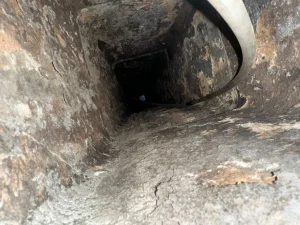
Standard residential air filters are designed to capture larger particles like pet dander, pollen, and coarse household dust. Fine construction particulates, especially drywall powder and silica, are small enough to slip right through. Once past the filter, they coat the interior duct walls, accumulate in bends and low points, and build up on the blower motor, evaporator coil, and heat exchanger.
The HVAC system then does exactly what it is designed to do: it moves air. And it moves that contaminated air to every room in your home, every cycle, every day.
This is why homeowners often notice a persistent dusty smell, increased allergy symptoms, or surfaces getting dusty quickly again after renovation, even weeks after the work is done. It is not leftover surface dust. It is your duct system re-distributing what got trapped inside.
Health Consequences of Skipping Post-Renovation Duct Cleaning
This is not a section designed to alarm you unnecessarily. But the health implications of ignoring post-renovation air duct cleaning are real and documented.
People living in homes with contaminated post-renovation ductwork often report:
Persistent dry coughing and throat irritation that seems to have no clear cause. Increased frequency of headaches, which in many cases are linked to elevated indoor VOC concentrations. Worsened allergy symptoms, including runny nose, itchy eyes, and congestion that does not respond normally to typical allergy remedies. Asthma flare-ups, particularly in homes where silica-laden dust is circulating from drywall sanding or tile cutting. Fatigue and general respiratory discomfort, which occupants often attribute to a seasonal illness when the actual source is indoor air quality.
The National Air Duct Cleaners Association (NADCA) explicitly states in its ACR (Assessment, Cleaning, and Restoration) standard that HVAC systems should be serviced when they have become contaminated with construction particulate or debris. This is not a marketing claim from a cleaning company. It is the industry’s professional standard, developed with input from HVAC engineers and indoor air quality researchers.
What Renovation Air Duct Cleaning Does for Your HVAC System
Beyond the health case, there is a clear mechanical argument for post-renovation duct cleaning that any homeowner should care about.
Restores Airflow and Efficiency
A groundbreaking study published by NADCA in partnership with researchers at the University of Colorado found that cleaning HVAC systems reduced fan and blower energy consumption by 41 to 60 percent, while supply airflow improved by 10 to 46 percent compared to uncleaned systems. Construction debris is one of the fastest ways to accumulate this kind of performance-degrading buildup.
When ducts are clogged with fine particulate matter, the blower has to work harder to push conditioned air through the system. That extra effort shows up in your utility bills and shortens the life of your equipment.
Protects Your Equipment
Renovation debris settling on evaporator coils, blower wheels, and heat exchangers does lasting damage. Coils coated with dust cannot transfer heat efficiently. Blower wheels with debris on their fins become unbalanced. These are not cheap repairs. A single evaporator coil cleaning or blower motor replacement can run into hundreds or thousands of dollars depending on your system. Post-renovation duct cleaning addresses these components before long-term damage sets in.
Eliminates Odor at the Source
Paint fumes, adhesive odors, and chemical smells that seem to linger in a renovated space are often coming from your duct system, not the surfaces themselves. VOC-laden dust particles sitting inside the ductwork keep releasing those compounds every time your system runs. Professional cleaning removes the source rather than masking the symptom.
Reduces Fire Risk
This is a lesser-known but legitimate concern. Fine sawdust and drywall particles accumulating near heat sources within a duct system represent a real fire hazard. Duct systems near furnaces or air handlers with significant debris buildup carry elevated risk, particularly in older systems.
When Should You Schedule Duct Cleaning After a Renovation?
The right time for post-renovation air duct cleaning is after all construction work is completely finished, not during.
Scheduling while active construction continues only means the ducts fill up again before the job is done. Wait until the final walk-through is complete, all surfaces have been swept and wiped down, and the home is otherwise clean.
For smaller single-room renovations, the urgency is somewhat lower than after a whole-home remodel, kitchen gut renovation, or structural work, but it is still warranted. Even a bathroom remodel with tile cutting, drywall patching, and new fixtures introduces meaningful amounts of fine particulate into the air system.
As a practical benchmark, the industry standard for routine duct cleaning without any renovation activity is every five to seven years. After any significant construction project, that schedule resets immediately. The post-renovation cleaning stands entirely on its own and should not be counted as part of a routine maintenance interval.
Also Read: What’s Included in a Professional Air Duct Cleaning Service?
What Professional Renovation Duct Cleaning Actually Involves
- System Inspection: Technicians inspect the ductwork, often using cameras, to identify dust and debris buildup.
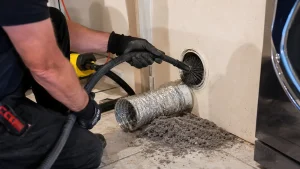
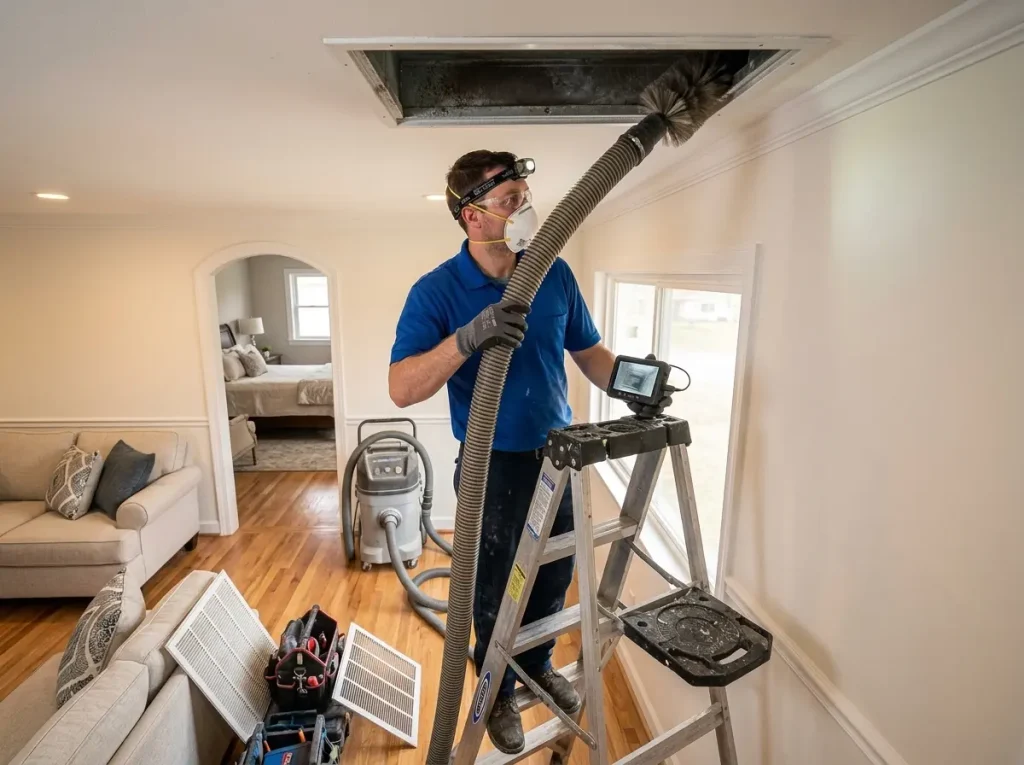
- Deep Duct Cleaning: High-powered vacuums create negative air pressure while brushes and compressed air tools remove dust from ducts and vents.
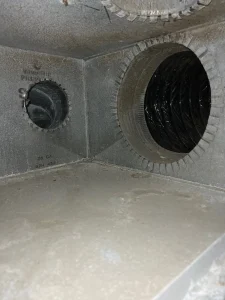
- HVAC Component Cleaning: The blower, air handler, and evaporator coil are cleaned if renovation dust has reached these areas.
- Register Cleaning: All supply and return vents are cleaned to remove trapped debris.
- Filter Replacement: A clean air filter is installed, and a follow-up replacement may be recommended after 30 days.
- Final Inspection: The system is checked to ensure contaminants have been properly removed.
- NADCA Standards: Reputable companies follow NADCA guidelines for thorough source-removal cleaning rather than surface-level dust removal.
Common Questions Homeowners Ask About Renovation Air Duct Cleaning
I covered my vents during the renovation. Are my ducts still contaminated?
Almost certainly yes, to some degree. Standard plastic sheeting over vent covers is not airtight. Fine particles, particularly drywall dust and VOC-laden air, find gaps and enter the return side of the system. The return air side is under negative pressure when the system runs, which makes it especially effective at drawing particles in around imperfect seals. Covering vents reduces contamination but does not eliminate it.
Can I just run my system with a high-efficiency filter for a few weeks instead of getting it cleaned?
Running a HEPA or high-MERV filter helps capture airborne particles but does not remove what has already settled inside the ductwork, on the coil, or in the air handler. It is a useful complementary step but not a substitute for cleaning.
How do I know if my ducts actually need cleaning and not just a filter change?
Some clear signals: visible dust coming from supply registers when the system starts up, a persistent musty or chemical odor that returns after airing out the home, noticeably more dust accumulating on surfaces than before the renovation, or allergy symptoms that began or worsened after construction finished. Any of these warrants a professional inspection.
Is post-renovation duct cleaning more expensive than regular duct cleaning?
It can be moderately higher in cost because post-renovation cleaning typically involves heavier debris loads and may include more thorough attention to the air handler and coil. The exact cost depends on the size of your home and system. A professional inspection will give you an accurate assessment upfront.
What Happens If You Skip Renovation Air Duct Cleaning
Some homeowners weigh the cost of cleaning against what they see as an optional service and decide to wait. Here is what that decision tends to look like over time.
HVAC systems running with post-renovation debris inside them wear down faster. Coils coated with construction dust run less efficiently, which means higher energy bills month after month. Blower motors under extra strain have shorter service lives. Filters clog faster, requiring more frequent changes.
Health effects accumulate gradually and are easy to misattribute. Allergy symptoms that “started this year,” a persistent cough that comes and goes, or fatigue that feels like it might just be stress, these are the kinds of slow-developing issues that trace back to indoor air quality but rarely get connected to the renovation that happened eight months ago.
And the debris does not go away on its own. It stays in the duct system until it is physically removed.
Breathe Cleaner, Live Better with Omega Duct Cleaning
Your renovation was an investment in your home. Protecting that investment, and the health of everyone in it, starts with the air your family breathes every day.
At Omega Duct Cleaning, we have built our reputation serving homeowners who want the job done right, not just done. Our post-renovation air duct cleaning service goes beyond surface-level work. We clean the full system, including the air handler, coil, blower compartment, and every supply and return register, using professional-grade negative air equipment that physically removes construction debris instead of moving it around.
We follow the same NADCA-aligned standards that the industry’s most respected professionals follow, and we inspect before and after so you can see exactly what changed.
If your home has recently gone through any construction or remodeling work, do not let contaminated ductwork undo what you just spent time and money building. Call us to schedule your post-renovation duct inspection today.